The Six Degrees of Jesus: How "Context Shrinkage" Manufactures the Attis Copycat Myth
Does the story of the Phrygian god Attis actually parallel the life of Jesus? Discover how the "Six Degrees of Jesus" fallacy uses "Context Shrinkage" to strip away historical facts and manufacture parallels that simply aren't in the original sources.
The claim that Jesus was copied from gods like Attis is usually presented as a checklist—twelve disciples, death on a tree, resurrection after three days. It looks like evidence. It is not.
For more in depth examination of how this myth is mischaracterized by modern “comparative religionists,” see:
Context Shrinkage
Context Shrinkage is a logical maneuver where the defining layers of a story are stripped away until what remains is so generic that it can be forced to parallel almost anything.
Once a story is reduced to that level, the comparison is no longer about what the sources say—it is about how much detail you are willing to ignore.
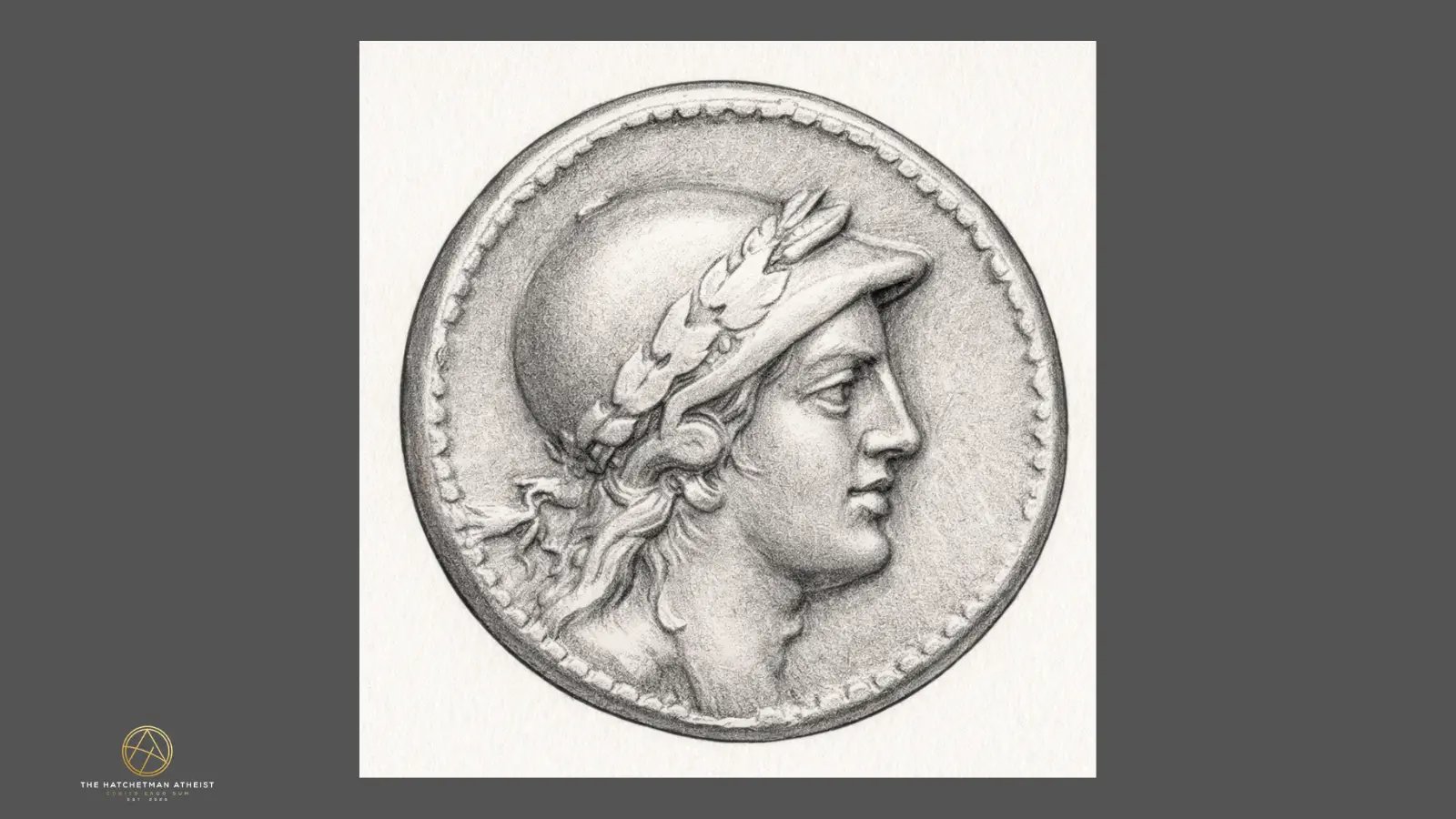
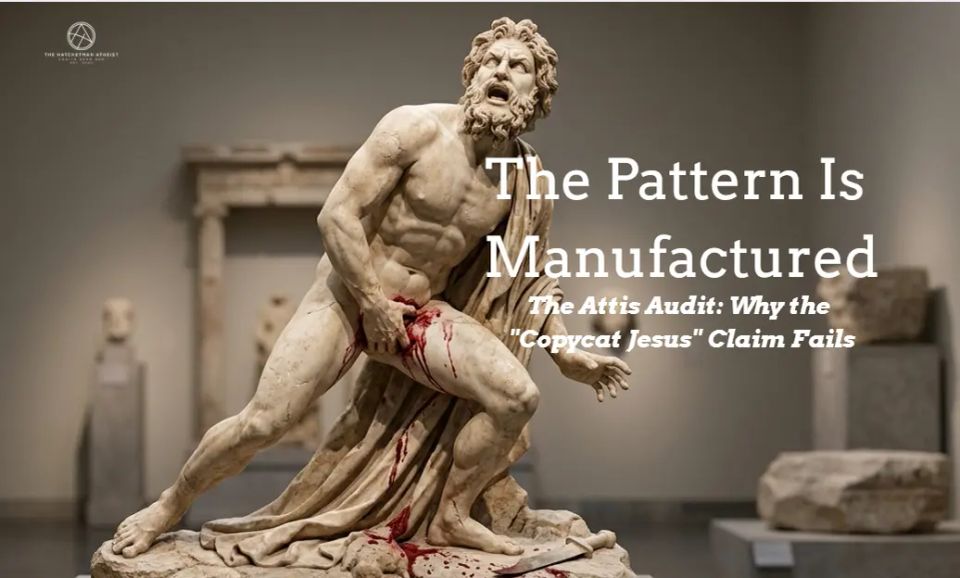
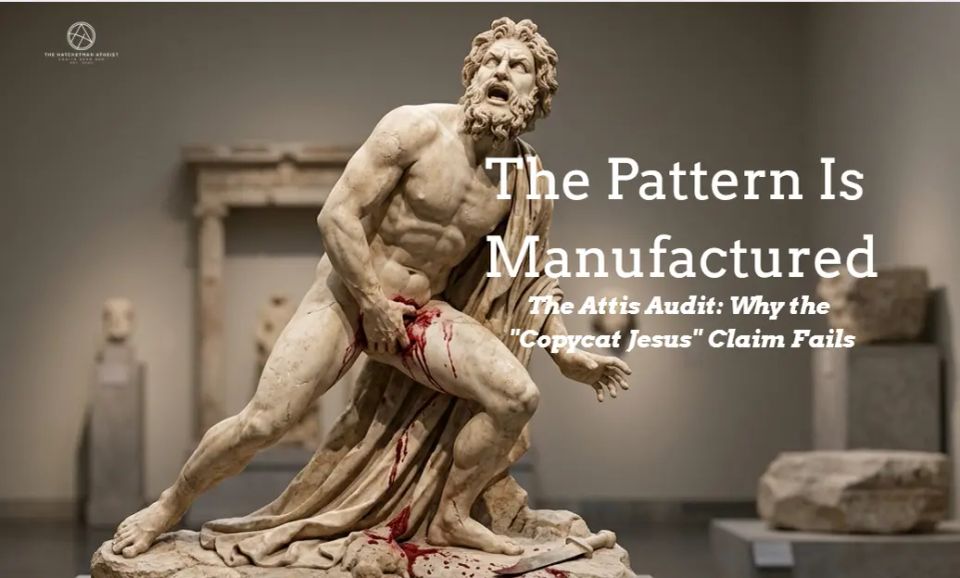
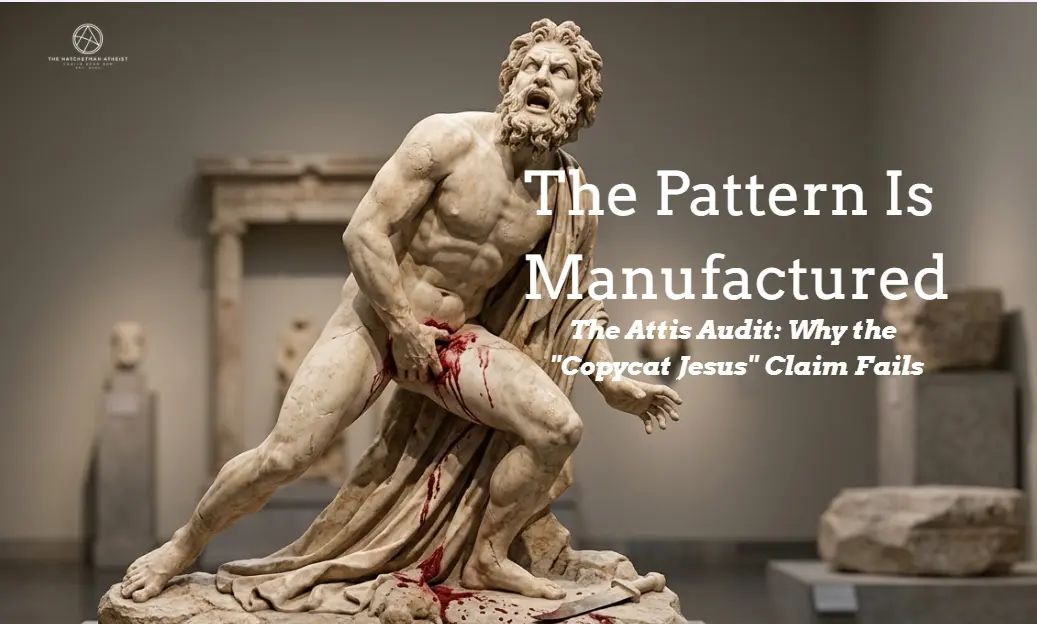
To make Attis look like Jesus, skeptics have to discard every unique detail of the Phrygian tradition—the madness, the castration, the forest—until only a “skeleton” remains. Once the story is skeletal enough, you can force it into any frame you choose.
I call this the Six Degrees of Jesus Fallacy: a game where, if you ignore enough facts, everything eventually looks like a parallel.
It is the historical equivalent of taking a car, deconstructing it down to its component parts, and then arguing it is the same thing as a toaster because both are made of metal.
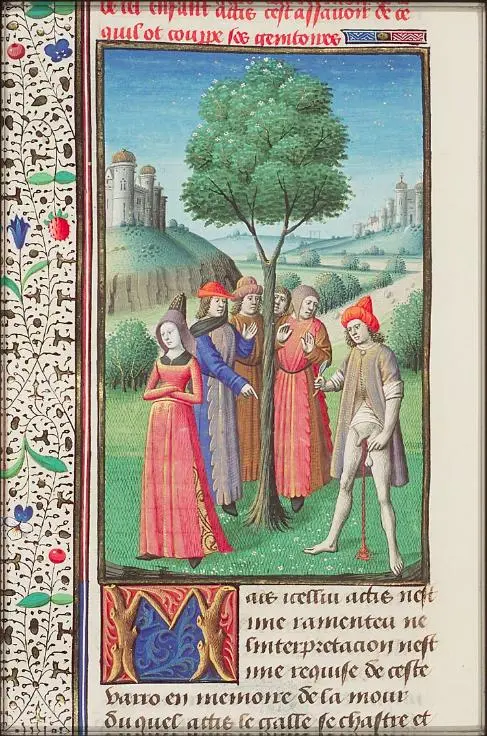
Did Attis Have Twelve Disciples Like Jesus?
There is no ancient literary or artistic source that presents Attis as a travelling teacher followed by twelve disciples.¹
Under the full documentary record:
- Herodotus presents a mortal prince.
- Catullus presents a frenzied devotee bound to the goddess.
- Pausanias—writing roughly a century after the Gospels—presents the fully developed mythic narrative.
- Arnobius preserves the late antique understanding of the cult.
- The Roman festival calendar records ritual practice.
At no point in any of these layers does a circle of twelve disciples appear.
So where does the number twelve come from?
Not from biography. From late iconography.
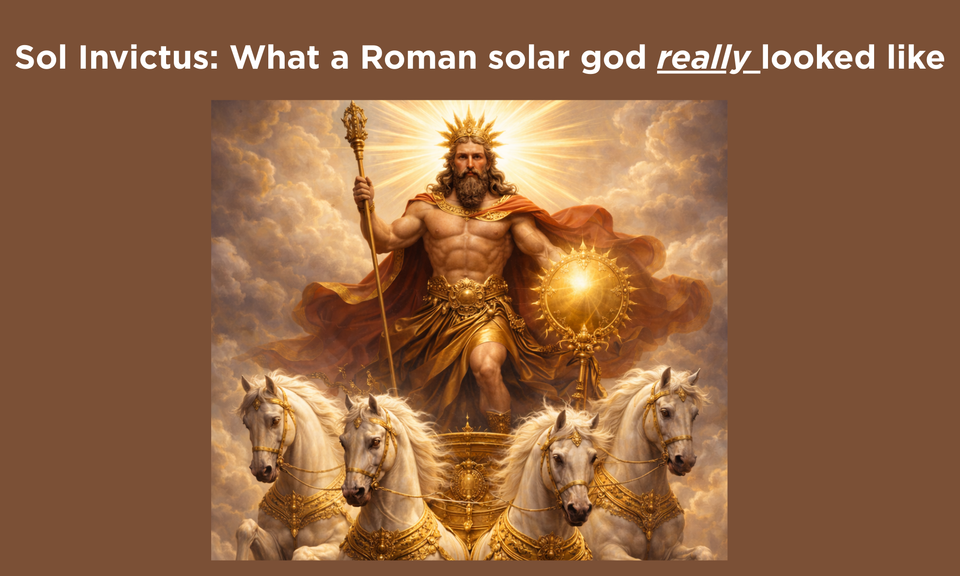
Centuries after Christianity was already established, late pagan philosophical movements—especially Neoplatonic traditions—began to reinterpret older deities in cosmic and astral terms. In this later framework, Attis was recast as a solar or cosmic figure, embedded in the structure of time itself.² It is in this late transformation—not in the early myth—that the number twelve becomes significant.
In this context, Attis is sometimes depicted surrounded by twelve figures. These are not disciples. They are zodiacal or calendrical symbols—representations of the twelve months or the twelve signs of the zodiac.
One of the clearest examples is the Parabiago plate, a fourth-century Roman silver artifact discovered near Milan. It presents Cybele and Attis within a dense symbolic composition filled with celestial and seasonal imagery. The surrounding figures are part of that cosmic program.³
This is not a narrative scene. It is a cosmic diagram. The twelve figures belong to the structure of the heavens, not to a circle of followers. In many cases, these figures are associated with the cycles of the year, carrying seasonal markers such as seeds, agricultural tools, or harvesting implements that identify them as representations of time and fertility, not human companions. The claim that these are “disciples” requires ignoring both the symbolic language of Roman art and the late date of the material itself.
The timeline makes the problem fatal.
This solarized, zodiac-framed Attis belongs to a late antique world, centuries after the Gospels were already in circulation.⁴ For the copycat theory to work, the writers of the New Testament would have needed access to artistic and theological developments that had not yet occurred.
The “twelve disciples of Attis” are not hidden in ancient sources. They are created by misreading late cosmological imagery as early biography.
A Tree Is Not a Cross
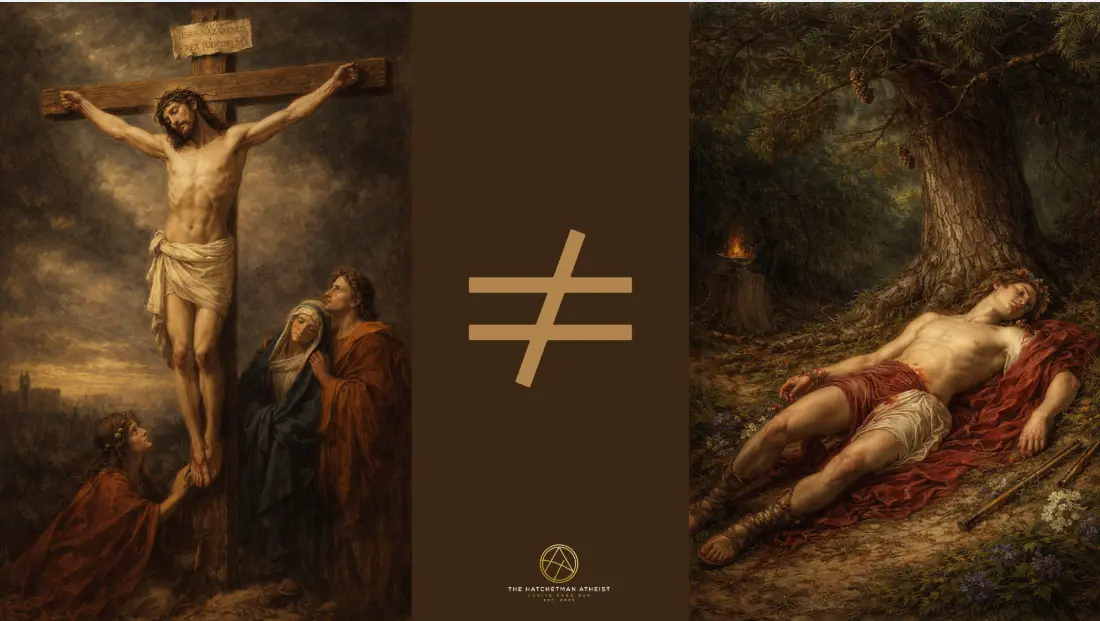
The claim that Attis was “crucified” is the clearest example of Context Shrinkage in action.
A cross is a specific, engineered instrument of execution. It is constructed for a singular purpose: to kill.
The tree in the Attis myth is nothing like that.
The tree is present because the event takes place in a forested setting.
It is the setting, not the cause—and confusing the two is what makes the comparison possible.
Attis did not die on the tree, by the tree, or because of the tree. He died in a place where trees happened to be present.
The actual cause of death is self-castration followed by exsanguination in a state of divine madness.⁵
This creates two irreconcilable differences:
- Suicide vs. Execution
- Environment vs. Instrument
Jesus dies by Roman execution on a constructed device designed to kill.
Attis dies by self-inflicted mutilation in a natural setting where a tree happens to be nearby.
The tree only becomes important after the death. In Roman ritual, particularly the Arbor intrat, a pine tree is cut, wrapped, and carried as a symbolic representation of Attis.⁶ It functions as an emblem of grief, vegetation, and seasonal renewal.
It is not a record of how he died.
To turn this into a crucifixion, the comparison must strip away every defining element of the story—madness, mutilation, ritual context—and reduce it to “a man who died near wood.”
At that point, the comparison becomes meaningless. By that standard, any man who dies outdoors is one pine cone away from becoming Jesus.
The Attis “Virgin Birth” Claim Exposed
Zeus Refused Resurrection
If the Attis parallel is going to work, this is where it has to succeed.
It does not.
In the account preserved by Pausanias—writing roughly a century after the Gospels—Zeus is asked to restore Attis to life.
He refuses.
Instead, Zeus grants a lesser concession: the body will not decay.⁷
That is the critical point.
Attis is not resurrected. He is preserved.
He does not return to life.
He does not leave a tomb.
He does not appear to followers.
He does not resume activity.
His body simply does not rot.
Later discussions of the myth make the point even more painfully clear. In late antique sources, the same tradition is preserved: Attis remains physically intact, his hair may continue to grow, and a finger may retain motion—but he is not restored to life.⁸
This is not a borderline case. It is a categorical difference.
A preserved corpse is not a resurrected person.
The entire comparison depends on quietly redefining incorruptibility as resurrection. Once that substitution is exposed, the parallel collapses immediately.
Hilaria and the “Three Days”
The final attempt to rescue the parallel comes from ritual.
The argument claims that Attis was mourned and then celebrated after three days in the Hilaria festival, creating a “three-day resurrection” parallel.
This fails on two levels.
Category Error
The evidence comes from the Roman festival cycle.
The sequence includes:
- The entry of the sacred tree
- The Day of Blood
- The Hilaria (Day of Joy)
What happens across these days is a shift from mourning to celebration.
That is not a resurrection narrative.
It is a ritual transition.
Grief gives way to joy.
Winter gives way to spring.
Nothing in the ritual requires Attis to physically rise from the dead.
The festival marks a change in emotional and seasonal state, not a biological event.⁹
Chronological Failure
The structured Roman festival cycle is clearly described in imperial sources, centuries after the Gospels were already in circulation.¹⁰
That alone is decisive.
Even if one insists on reading the Hilaria as symbolic “revival,” it cannot function as a source for the Christian resurrection narrative. The timeline runs in the wrong direction.
The “three days” argument depends on taking a late ritual structure, interpreting it symbolically, and projecting it backward as though it existed in the earlier myth.
That is not historical analysis. It is reverse engineering.
The Audit Result
When the full record is restored, the pattern is clear:
- A mortal man dies.
- A cultic figure suffers and is bound to a goddess.
- A mythic figure is preserved from decay.
- That preservation is repeated in later sources.
- A seasonal festival celebrates renewal.
At no point does the story produce:
- A travelling teacher
- Twelve disciples
- A crucifixion
- A resurrection after three days
Those elements only appear after the story has been stripped, flattened, and reconstructed.
That is Context Shrinkage.
The pattern is not discovered—it is manufactured. And once the original structure is restored, there is nothing left to compare.
Further Reading
If you want a closer look at how weak parallels, bad neuroscience, and burden-shifting arguments collapse under scrutiny, start here:
Footnotes
- Herodotus, Histories 1.34–45; Catullus, Poem 63; Pausanias, Description of Greece 7.17.10–13.
- Jan Bremmer, “Attis: A Greek God in Anatolian Pessinous and Catullan Rome,” Mnemosyne 57 (2004).
- The Parabiago Plate (4th century CE), discussed in M. J. Vermaseren, The Legend of Attis in Greek and Roman Art (1966).
- John Granger Cook, “Resurrection in Paganism and the Question of an Empty Tomb,” New Testament Studies 63 (2017).
- Catullus, Poem 63; Pausanias, Description of Greece 7.17.
- M. J. Vermaseren, Cybele and Attis: The Myth and the Cult (1977), on Arbor intrat.
- Pausanias, Description of Greece 7.17.12–13.
- Arnobius, Against the Nations, Book 5.
- M. J. Vermaseren, Cybele and Attis; festival sequence.
- Roman calendar sources such as the Chronography of 354 and later imperial attestations of the Hilaria festival.