
Was Jesus a Myth? Why the Nazareth Origins Point to a Real Person
If Jesus were a myth, he would have been born in Bethlehem to satisfy prophecy. Instead, the Gospels struggle to explain his "backwater" origins in Nazareth. Discover why this narrative tension points to a real historical figure.
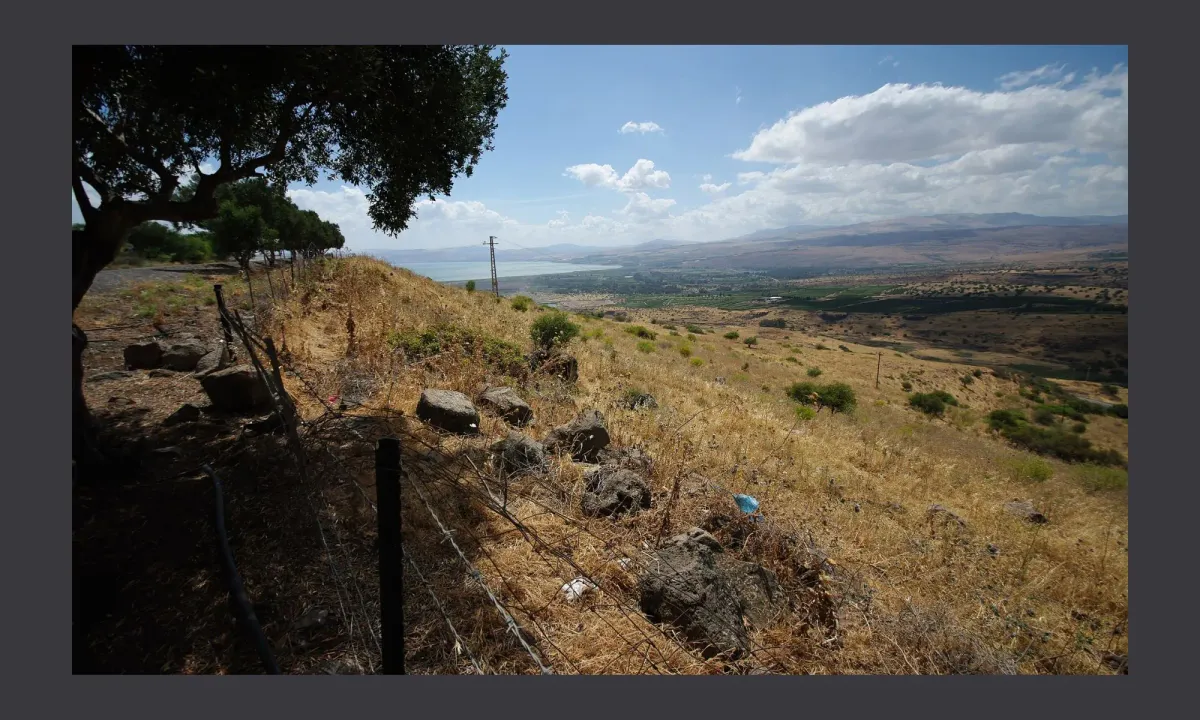
Key Insights: The Nazareth Constraint
- The Prophetic Requirement: Bethlehem was a "messianic credential." A fictional messiah would have been born there by default to satisfy scripture.
- The Nazareth Stigma: Jesus was persistently known as being from Nazareth—a backwater village that offered no theological authority and invited social scorn.
- Memory vs. Invention: Historians see Nazareth as a "fixed datum." It was too well-known to erase, so the Gospel authors had to work around it.
- Visible Repairs: Matthew and Luke create two entirely different, incompatible stories to move Jesus from his real home (Nazareth) to his prophetic "requirement" (Bethlehem).
- The Verdict: These narratives are not the smooth fabric of myth; they are theological repairs forced by a stubborn historical reality.
Table of Contents
- If Jesus Were Invented
- Nazareth: An Embarrassing Origin
- Davidic Descent and the Requirement of Bethlehem
- Two Incompatible Birth Narratives
- Constraint, Not Creativity
- Bethlehem as Retrofit, Not Origin
- Nazareth as a Double Embarrassment
- What This Tells Us About Historical Probability
- Appendix: Scriptural Passages Referenced
If Jesus Were Invented
If Jesus were invented, he would have been born in Bethlehem.
That sentence alone does most of the historical work. Bethlehem was not merely a town; it was a credential. It was the City of David, saturated with royal memory and messianic expectation. A messiah from Bethlehem required no narrative justification. It fit prophecy. It solved problems before they arose.
But Jesus was not known as “Jesus of Bethlehem.” He was known—persistently, inconveniently, and across multiple traditions—as Jesus of Nazareth.
That is the problem the gospels inherit, not the one they invent.
Matthew and Luke both confront this problem, and both attempt to solve it. They do so in strikingly different ways—not because the authors are careless, but because they are working within limits imposed by what was already known about Jesus. While later theology could reshape meaning, it could not freely rewrite memory. When traditions are forced to accommodate stubborn facts, strain becomes visible. When they are freely invented, it does not.
This article is part of a four-post series examining Jesus through the lens of historical method rather than theological expectation. Related essays:
Nazareth: An Embarrassing Origin
Nazareth was a nothing village. It carried no scriptural prestige, no royal association, and no prophetic weight. It was small, obscure, and theologically inert.
The Gospel of John preserves the dismissive reaction directly: can anything good come out of Nazareth? This is not rhetorical color. It reflects social reality.
Nazareth conferred no authority. It was apparently regarded as a backwater village with a negative connotation. Being from Nazareth was something to overcome, not something to advertise.
This is precisely why Nazareth functions as an embarrassment.
A fabricated messiah would not be burdened with an origin that immediately required explanation. An invented figure would simply come from the right place. Nazareth, by contrast, behaves like a fixed historical datum—something later authors cannot erase, only accommodate.
The gospels never deny Nazareth. They explain it.
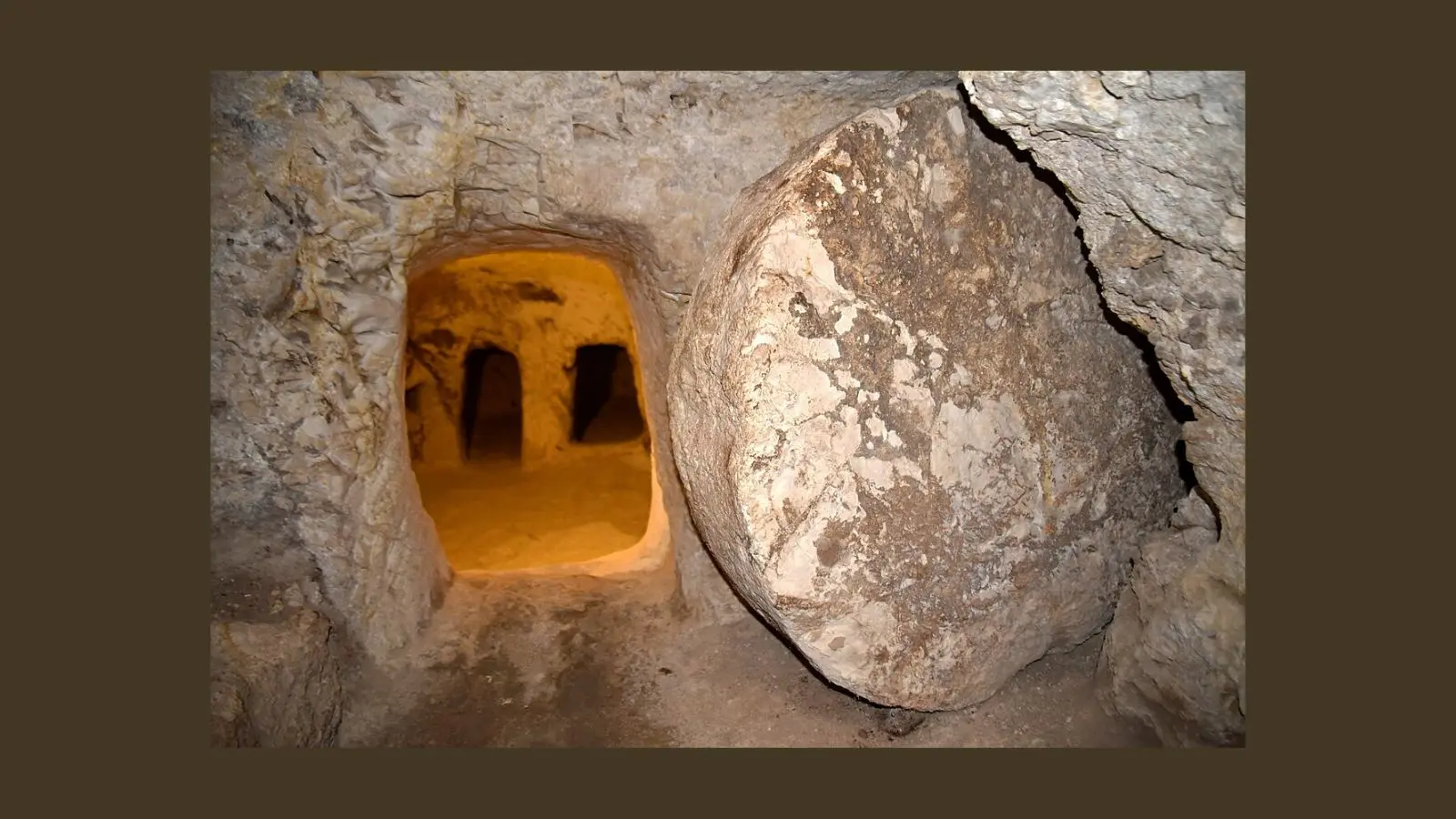
Davidic Descent and the Requirement of Bethlehem
By the first century, messianic expectation had narrowed decisively around David. The messiah was expected to be his descendant—not symbolically, but genealogically—and to come from David’s city: Bethlehem. This expectation was widely grounded in scripture, most commonly associated with Micah 5:2, which by this period was read messianically:
“But you, O Bethlehem of Ephrathah,
who are one of the little clans of Judah,
from you shall come forth for me
one who is to rule in Israel.”
Bloodlines mattered. Geography mattered. Legitimacy was inherited.
Matthew and Luke both understand this requirement. Both attempt to establish Jesus’ legitimacy by providing genealogies tracing his lineage through Joseph. These genealogies differ sharply in names, structure, and sequencing, but they agree on the single point that matters for their purpose: Jesus descended from David.
That agreement is the point. The genealogies function as credentials, not as records. They exist to say, independently and emphatically, this figure qualifies.
But lineage alone was not enough. Someone born in the wrong city could not be the messiah.
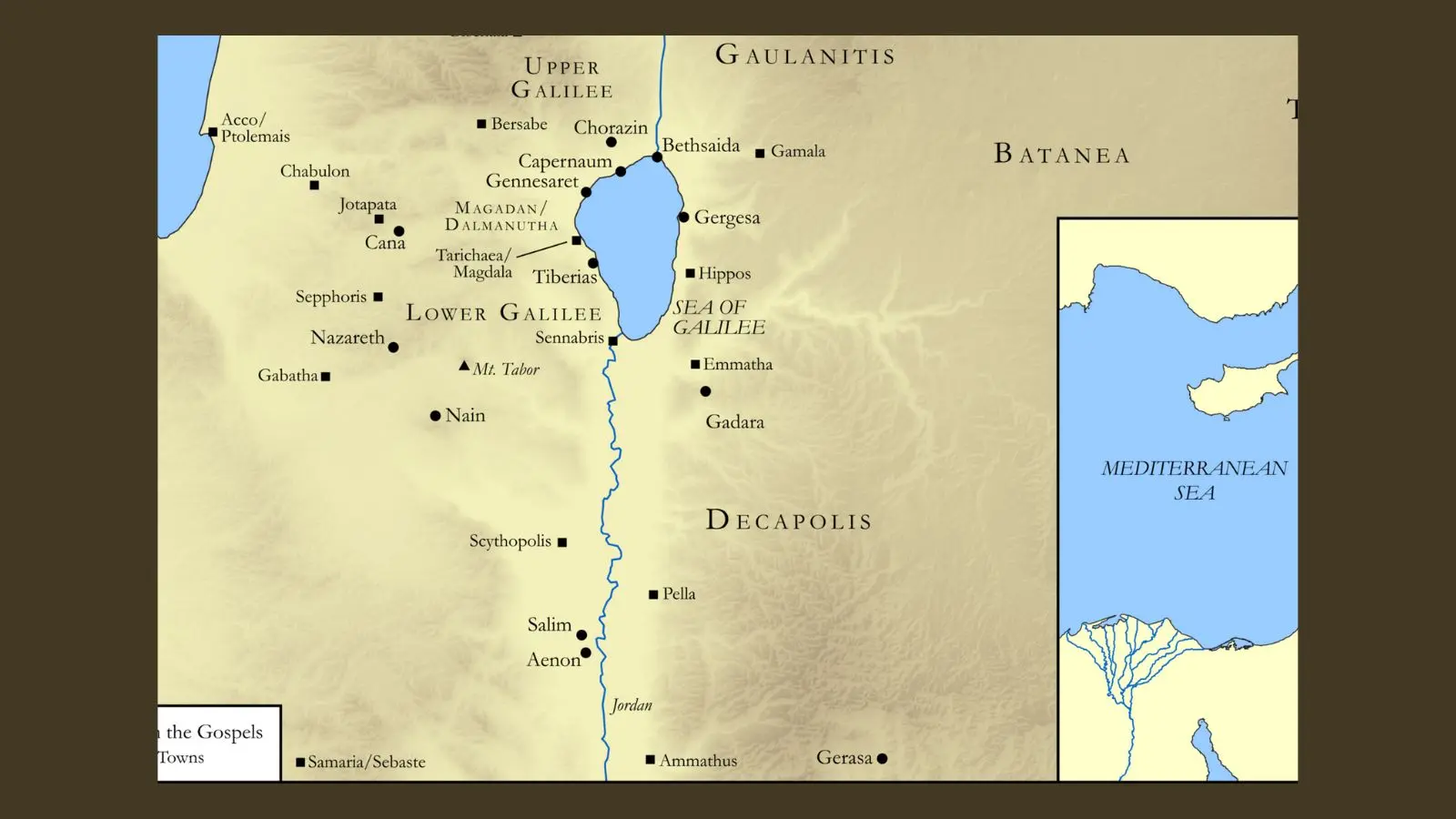
Two Incompatible Birth Narratives
Matthew and Luke are not telling two versions of the same birth story. They are telling two incompatible stories constructed to solve the same inherited problem.
In Matthew’s account, Bethlehem is the family’s home. Jesus is born there because that is where his parents already live. Nazareth enters the story only later, after the family returns from Egypt and deliberately avoids Judea. In Matthew, Nazareth is a secondary settlement, chosen after the fact.
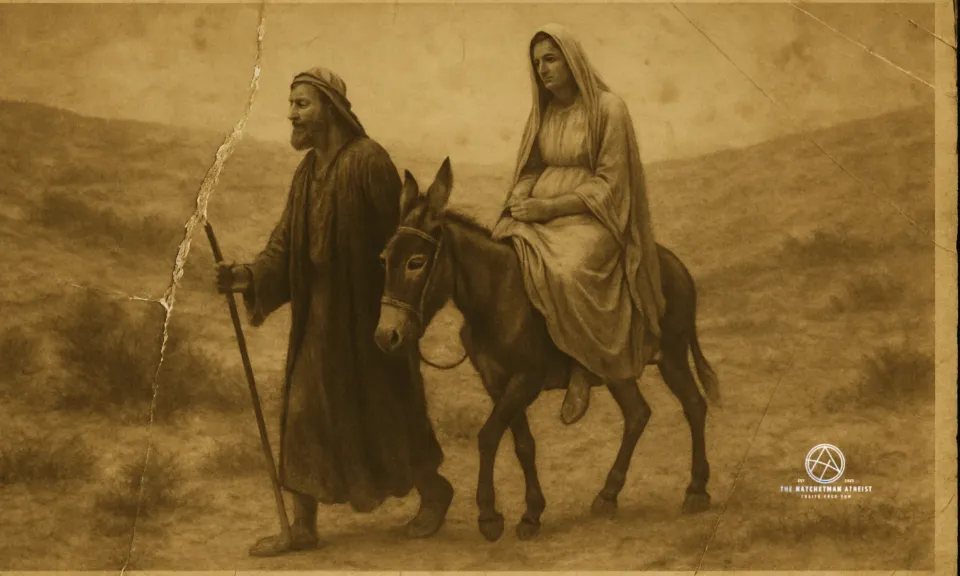
Luke’s account cannot be reconciled with this. In Luke, the family’s home is explicitly Nazareth. They do not live in Bethlehem, and there is no suggestion that they ever did. They travel to Bethlehem temporarily, solely because of a Roman census that requires Joseph to register in his ancestral city. Jesus is born during this brief visit, and the family returns directly to Nazareth soon afterward. Bethlehem, in Luke, is not home. It is a stopover.
These are not complementary traditions. They cannot be harmonized without inventing details neither author provides. In one account, Nazareth is a later relocation. In the other, it is the original and permanent home. In one, the flight into Egypt is central. In the other, it is entirely absent.
Constraint, Not Creativity
What unites these stories is not shared memory, but a shared constraint: both authors had to acknowledge the well-known fact that Jesus was from Nazareth while still establishing his credentials as a Bethlehem-born messiah. Nazareth could not be erased, and Bethlehem could not be avoided.
Theology could shape the story only within the limits reality allowed.
Nazareth marked the boundary.
Bethlehem as Retrofit, Not Origin
If Jesus were genuinely remembered as being from Bethlehem, no explanation would be required. The story would be simple, stable, and shared.
Instead, Bethlehem functions as a destination the narratives must reach, not as a remembered starting point. Each author constructs a different route to the same endpoint because each is constrained by the same immovable fact and guided by different theological priorities.
This pattern mirrors what we see elsewhere in the Jesus tradition. As argued in
Jesus, Apocalyptic Failure, and Messianic Retrofit,
later theology is constructed over the collapse of earlier realities. The Bethlehem narratives operate the same way. They are not foundations. They are repairs.
And like most repairs, they remain visible.
Nazareth as a Double Embarrassment
Nazareth embarrasses the tradition twice.
First, it undermines messianic legitimacy. A Davidic ruler was not expected to come from an insignificant village.
Second, it carried social stigma. The dismissive reaction preserved in the gospels adds nothing to Jesus’ authority. It weakens it.
That detail survives for the same reason other inconvenient details survive: they were already too well known to remove.
As discussed in
The Criterion of Embarrassment and the Logic of Historical Probability,
traditions do not preserve such elements because they are useful. They preserve them because they are inherited.
What This Tells Us About Historical Probability
None of this requires the Bethlehem stories to be historically true. The census may be fictional. The massacre may be fictional. The flight to Egypt may be fictional.
What matters is why these stories exist at all.
They exist because Jesus was known as being from Nazareth, and that fact created a problem once messianic claims were attached to him. Bethlehem is not the origin. It is the solution.
Invented figures begin life in the right place.
Real ones force stories to bend around them.
Nazareth is the boundary. Bethlehem is the patch.
And that is why the birth narratives, taken seriously as historical evidence, point not toward invention but toward constraint.
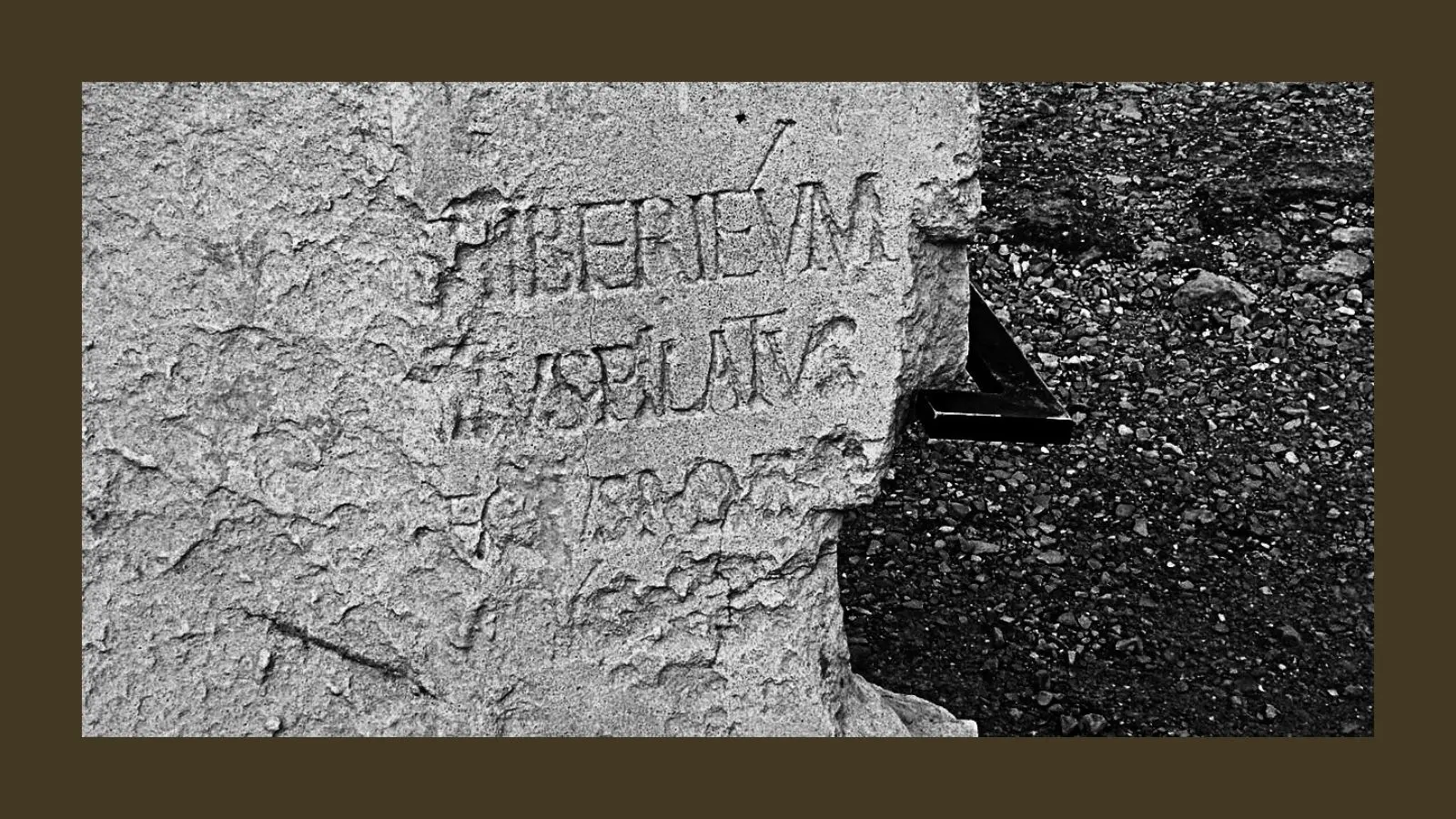
Jesus, Apocalyptic Failure, and Messianic Retrofit
The Criterion of Embarrassment and the Logic of Historical Probability
Appendix: Scriptural Passages Referenced
Birth Narratives
- Matthew 1:18–2:23
- Luke 1:26–2:40
Genealogies
- Matthew 1:1–17
- Luke 3:23–38
Davidic Expectation and Bethlehem
- Micah 5:2
- 2 Samuel 7:12–16
- Jeremiah 23:5
Nazareth as a Stigma
- John 1:46
Image Credits
-
Galilee countryside landscape (hero banner) —
Emmanuel Dyan, “Galilee – Israël.”
Wikimedia Commons. License: Creative Commons Attribution 2.0 Generic (CC BY 2.0).
License: https://creativecommons.org/licenses/by/2.0/
Source: https://commons.wikimedia.org/wiki/File:Galilee_-_Israël_(4674702607).jpg -
Map of Lower Galilee showing Nazareth —
Wikimedia Commons contributors.
License: Creative Commons Attribution–ShareAlike (CC BY-SA).
License: https://creativecommons.org/licenses/by-sa/
Source: https://commons.wikimedia.org/wiki/File:Lower_Galilee_map -
Sisters of Nazareth Convent excavation, Nazareth —
Bahnfrend, “Sisters of Nazareth Convent (Nazareth) archaeological site, 2019 (06).”
Wikimedia Commons. License: Creative Commons Attribution–ShareAlike 4.0 International (CC BY-SA 4.0).
License: https://creativecommons.org/licenses/by-sa/4.0/
Source: https://commons.wikimedia.org/wiki/File:Sisters_of_Nazareth_Convent_(Nazareth)_archaeological_site,_2019_(06).jpg -
Pilate inscription fragment (Caesarea Maritima) —
Marion Doss.
Wikimedia Commons. License: Creative Commons Attribution–ShareAlike 2.0 Generic (CC BY-SA 2.0).
License: https://creativecommons.org/licenses/by-sa/2.0/
Source: https://commons.wikimedia.org/wiki/File:Pilate_Inscription.jpg
.jpg?ref=the-hatchetman-atheist.ghost.io)
_archaeological_site,_2019_(06).jpg?ref=the-hatchetman-atheist.ghost.io)
