The Great Silence: Why the Sixteenth Century Forgot the Virgin of Guadalupe
Historians call it the "Great Silence." While tradition claims a miraculous apparition in 1531, the 16th-century record is strikingly empty. Explore why Bishop Zumárraga and other key witnesses never mentioned Juan Diego or the tilma.
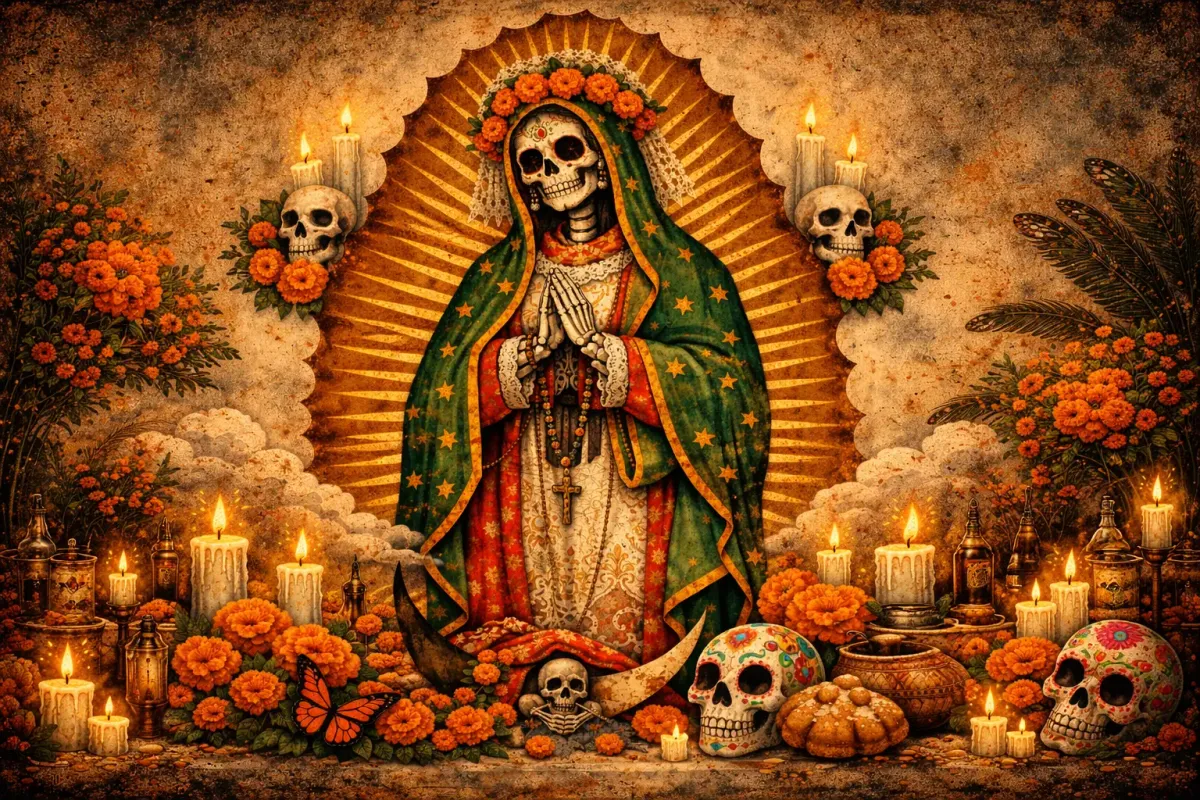
What if the most famous miracle in the Americas was completely unknown to the people who were supposedly there to witness it?
Table of Contents
- Introduction: The Great Silence
- The Story as Tradition Tells It
- What Is a Tilma, and Why Does It Matter?
- When Does the Story Enter History?
- The Great Silence and Conspicuous Omission
- Bishop Juan de Zumárraga
- Bernardino de Sahagún and Tepeyac
- Attempts to Break the Silence
- The Image Before the Story
- Syncretization as Policy, Not Accident
- A Familiar Pattern: Day of the Dead
- What Can Responsibly Be Said
- Why the Great Silence Still Matters
- Works Cited
- FAQ: Understanding the Great Silence
Introduction: The Great Silence
Few religious narratives in the Americas carry as much cultural, political, and symbolic weight as the Vision of Guadalupe. It is frequently invoked as evidence that Christianity in New Spain spread through miracle rather than coercion—an Indigenous vision freely offered and divinely affirmed.
That claim rests entirely on a story.
Before evaluating whether the story is true, it must first be placed in time. And once we do that, an uncomfortable fact emerges: the century in which the miracle allegedly occurred does not record it at all.
Historians refer to this absence as the Great Silence. It is not a minor gap in the record. It is the defining feature of the evidence.
The Story as Tradition Tells It
According to later Catholic tradition, in December of 1531—roughly ten years after the Spanish conquest of Tenochtitlan—an Indigenous man named Juan Diego experienced a divine apparition near Tepeyac, just outside Mexico City.
Juan Diego’s Nahuatl name, Cuauhtlatoatzin (One Who Speaks Like an Eagle), situates him firmly within the Nahua cultural world. The narrative frames him as an Indigenous intermediary chosen to bridge heaven and the colonial church.
He reportedly encountered a radiant woman who spoke to him in Nahuatl and identified herself as the Virgin Mary. She instructed him to ask the bishop of Mexico, Juan de Zumárraga, to build a church in her honor.
Zumárraga, the story continues, demanded proof.
In response, the Virgin caused Castilian roses—flowers unknown in Mexico and impossible to bloom in winter—to appear miraculously. Juan Diego gathered them in his cloak, or tilma, and carried them to the bishop. When he opened the garment, the roses fell out, and an image of the Virgin appeared imprinted on the cloth.
That image became the foundation of the devotion.
Further Reading and Related Essays
These essays demonstrate how skeptical methodology and evidentiary standards operate in practice, exposing the structural weaknesses in popular apologetic claims rather than merely defining the tools used to critique them.
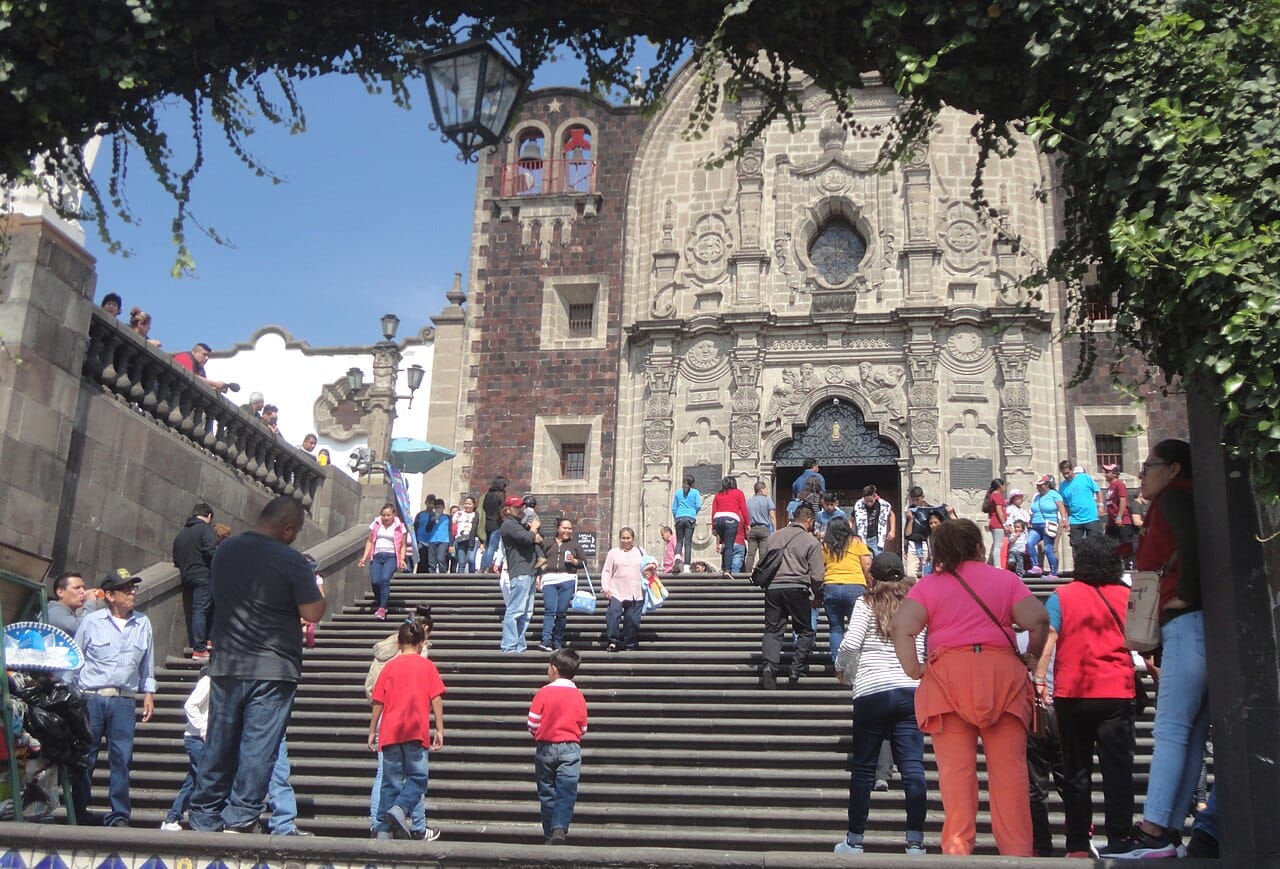
Capilla del Cerrito del Tepeyac, Mexico City. The hill of Tepeyac was a site of Indigenous religious significance prior to Spanish colonization and later became associated with Marian devotion. Photo by Juan Carlos Fonseca Mata, CC BY-SA 4.0, via Wikimedia Commons.
What Is a Tilma, and Why Does It Matter?
A tilma was a simple cloak worn by Indigenous men in central Mexico, typically woven from maguey fiber. It was utilitarian, often used to carry goods, and not designed for long-term preservation.
Later devotional accounts maintain that Juan Diego’s tilma has survived for centuries in a condition inconsistent with its material composition. Today, it is displayed at the Basilica of Guadalupe and is frequently presented as physical confirmation of the apparition itself.
Whether an object can establish the historical reality of the event that supposedly produced it is a separate question. The more immediate issue is when the story explaining that object enters the historical record.
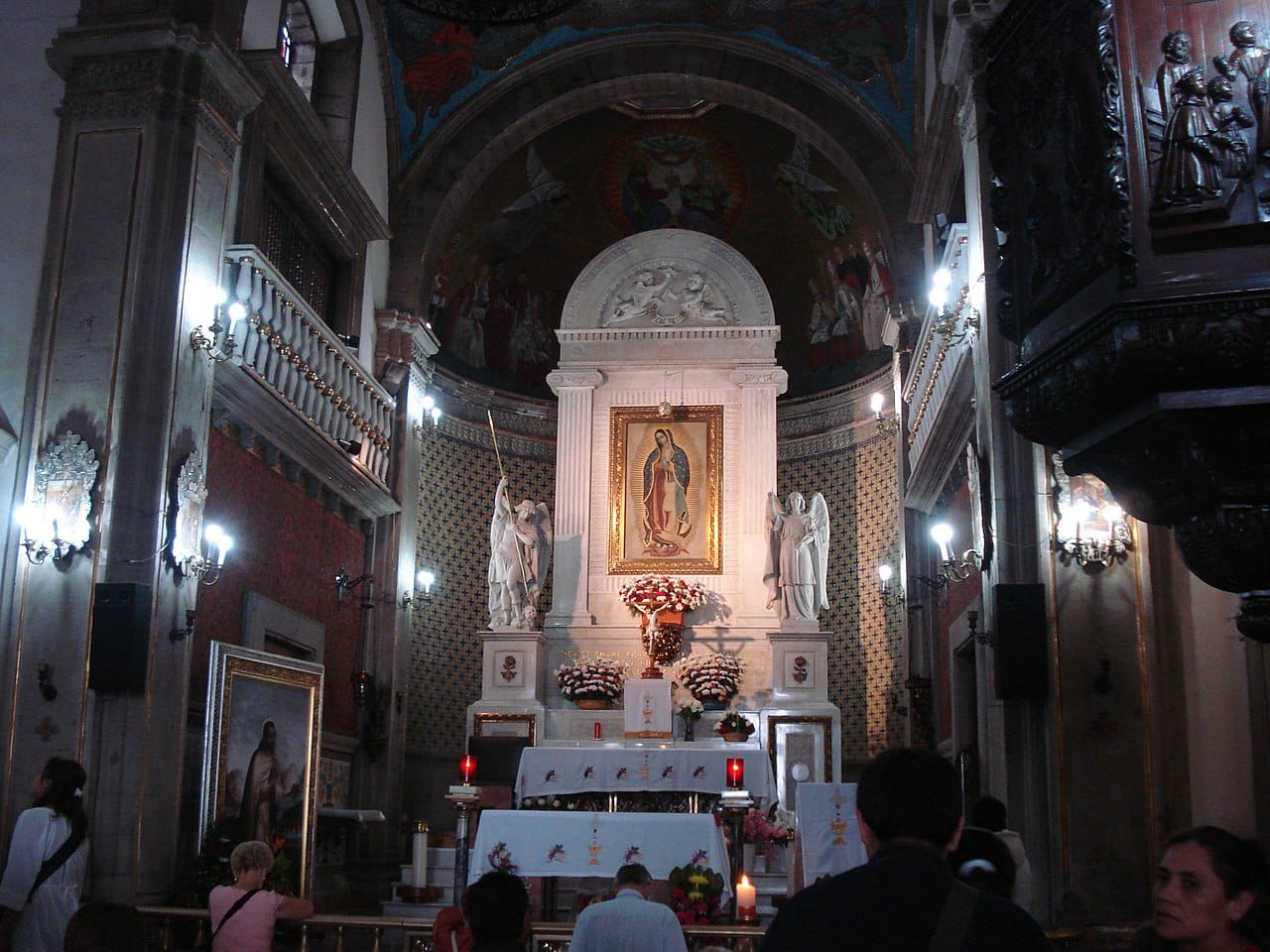
The tilma traditionally identified as Juan Diego’s cloak, displayed above the main altar in the Basilica of Guadalupe. Distance and lighting limit close inspection during public viewing. Image used with attribution as required by source.
When Does the Story Enter History?
Not in the 1530s.
Not even in the sixteenth century.
Not even within a century of the event.
The detailed apparition narrative does not appear in any known Primary Source from the period in which it allegedly occurred. It is absent from Spanish colonial administrative records, Indigenous-authored texts from the sixteenth century, and the extensive writings of Bishop Zumárraga.
The first full written account appears in 1648, published by Miguel Sánchez—a Secondary Source written more than 115 years after the events it describes. A Nahuatl version, commonly known as the Nican Mopohua, followed in 1649.
This gap defines what historians of Guadalupe call the Great Silence.
The Great Silence and Conspicuous Omission
As historian Stafford Poole emphasized, the problem is not simply that sources are late. It is that the right people are silent.
This is what historians mean by conspicuous omission: the absence of information that would reasonably be expected given an author’s subject, purpose, and audience.
This is not a naïve Argument from Silence. The omission is significant precisely because the missing information would have strengthened the authors’ stated goals.
Bishop Juan de Zumárraga
The traditional narrative places Bishop Zumárraga at the center of the miracle. Juan Diego allegedly presents the tilma to him, and the image appears in his presence.
Zumárraga was a prolific writer. His letters, reports, sermons, and his Regla Cristiana survive in substantial quantity. He documented events he regarded as spiritually significant and actively promoted evangelization in New Spain.
Yet across this entire body of writing, he never mentions Juan Diego, a miraculous image, or an apparition at Tepeyac.
This is not merely silence. It is contradiction.
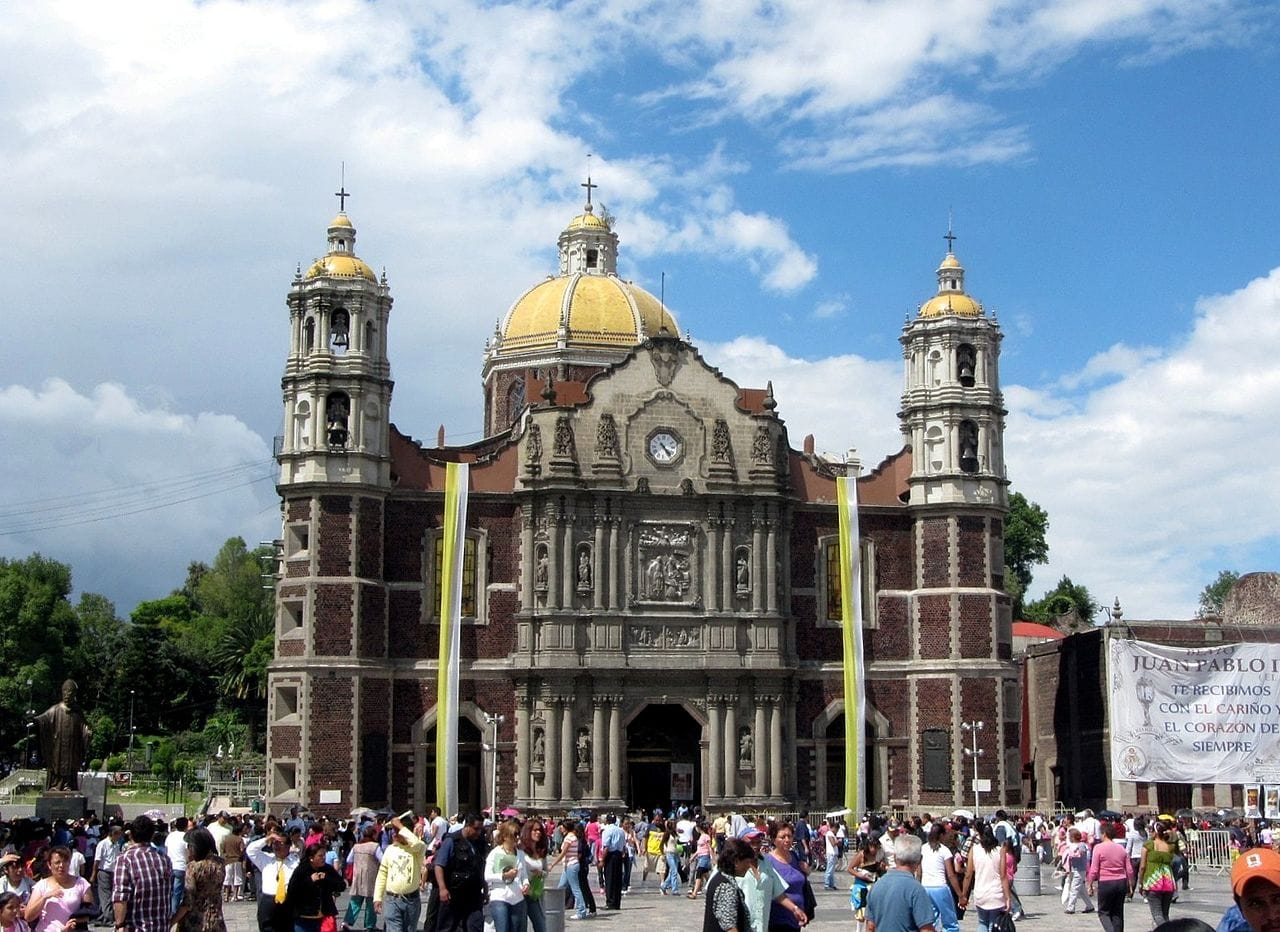
The Basilica of Our Lady of Guadalupe, Mexico City. The shrine’s development predates the detailed apparition narrative later attached to it. Photo by Minaram, CC BY-SA 4.0, via Wikimedia Commons.
Bernardino de Sahagún and Tepeyac
Bernardino de Sahagún addressed Tepeyac directly in Book 10 of the Florentine Codex. He described devotion at the site but made no reference to Juan Diego, a miraculous image, roses, or a Marian apparition.
His silence is notable given his role as a meticulous recorder of Indigenous religion and colonial Christianity.
Attempts to Break the Silence
Some proponents point to the Codex Escalada, a single parchment dated to 1548 that mentions Juan Diego. Its authenticity remains disputed, and even if accepted, it does not supply the full apparition narrative required by later tradition.
Rather than resolving the Great Silence, such fragments underscore how thin the sixteenth-century record remains.
The Image Before the Story
Sixteenth-century sources attest to Marian devotion at Tepeyac. They do not attest to the origin story later attached to it.
This interpretation rests on Historical Plausibility. Under this reading, the later apparition narrative functions as Retroactive Mythmaking, supplying an origin story to an already-venerated image.
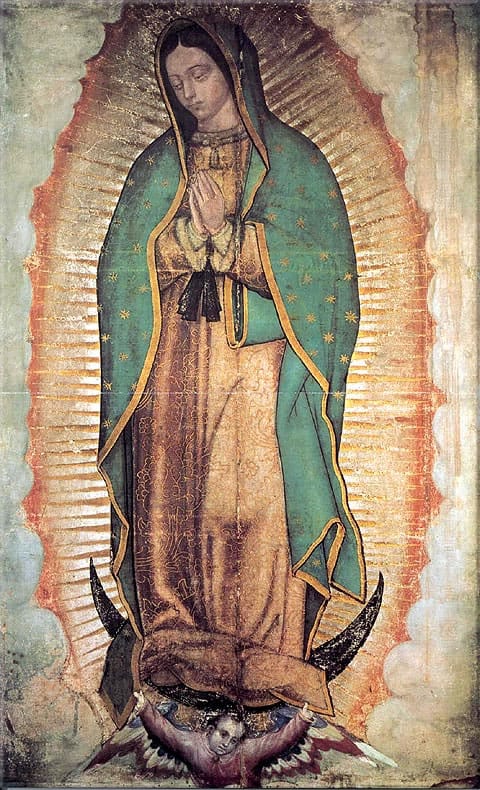
Close-up of the image traditionally identified as the Virgin of Guadalupe. The small figure at the bottom resembles donor figures common in early modern religious art. Public domain image.
Syncretization as Policy, Not Accident
Syncretization was not merely an unintended byproduct of colonial evangelization. Missionaries explicitly debated accommodation as strategy.
Guadalupe fits squarely within this missionary environment.
A Familiar Pattern: Day of the Dead
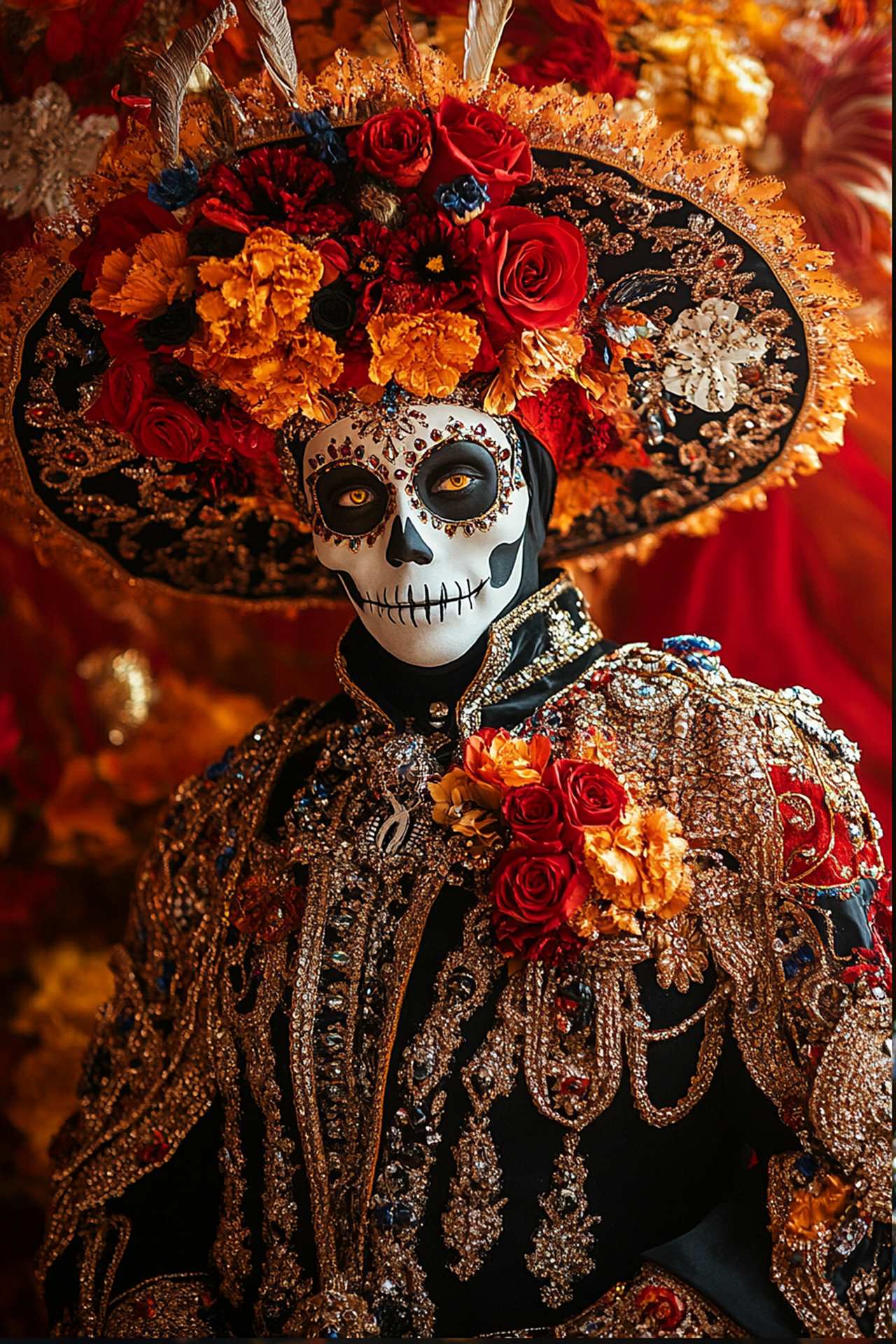
Day of the Dead imagery illustrating continuity under Christian framing rather than religious replacement. Free-use image; no attribution required.
What Can Responsibly Be Said
- Devotion at Tepeyac existed in the sixteenth century
- A Marian shrine attracted Indigenous pilgrims
- No contemporary source records an apparition in 1531
- The full narrative appears more than a century later
- The Great Silence is real and historically significant
Anything beyond this moves from history into tradition.
Why the Great Silence Still Matters
Guadalupe is often presented as evidence that Christianity in the Americas was embraced rather than imposed. The historical record suggests adaptation, negotiation, and continuity under colonial pressure.
If you find this work valuable and want to support future research and writing, including research and web-hosting costs, you can do so on patreon.
Works Cited
Brading, D. A. Mexican Phoenix: Our Lady of Guadalupe: Image and Tradition across Five Centuries. Cambridge University Press, 2001.
Poole, Stafford. Our Lady of Guadalupe: The Origins and Sources of a Mexican National Symbol, 1531–1797. University of Arizona Press, 1995.
Sahagún, Bernardino de. Florentine Codex: General History of the Things of New Spain. Translated by Anderson and Dibble, 1950–1982.
Sánchez, Miguel. Imagen de la Virgen María. Mexico City, 1648.
Taylor, William B. “The Virgin of Guadalupe in New Spain.” American Ethnologist, vol. 14, no. 1, 1987.
FAQ: Understanding the Great Silence
Does the Great Silence prove the miracle never happened?
In a strict historical sense, you cannot prove a negative. The Silence instead shifts the burden of proof.
Is conspicuous omission just a fancy term for “I can’t find it”?
No. It describes a silence that demands explanation given the author’s purpose and audience.