The Great Filter Is Probably Us
The Fermi Paradox asks why the universe seems silent despite billions of planets. The answer may be that civilizations collapse under the weight of their own instincts—the real Great Filter might be us.

The Fermi Paradox has been gnawing at scientists, philosophers, and barroom debaters for decades: the universe is ancient, vast, and swimming in planets, so where is everyone? My theory is that intelligent life is rare not because life itself is hard to spark, but because intelligence comes with a self-destruct mechanism built in. The same evolutionary instincts that get you smart enough to build a spaceship also push you toward burning down the launch pad.
Timing: The Civilizations We’ll Never Meet
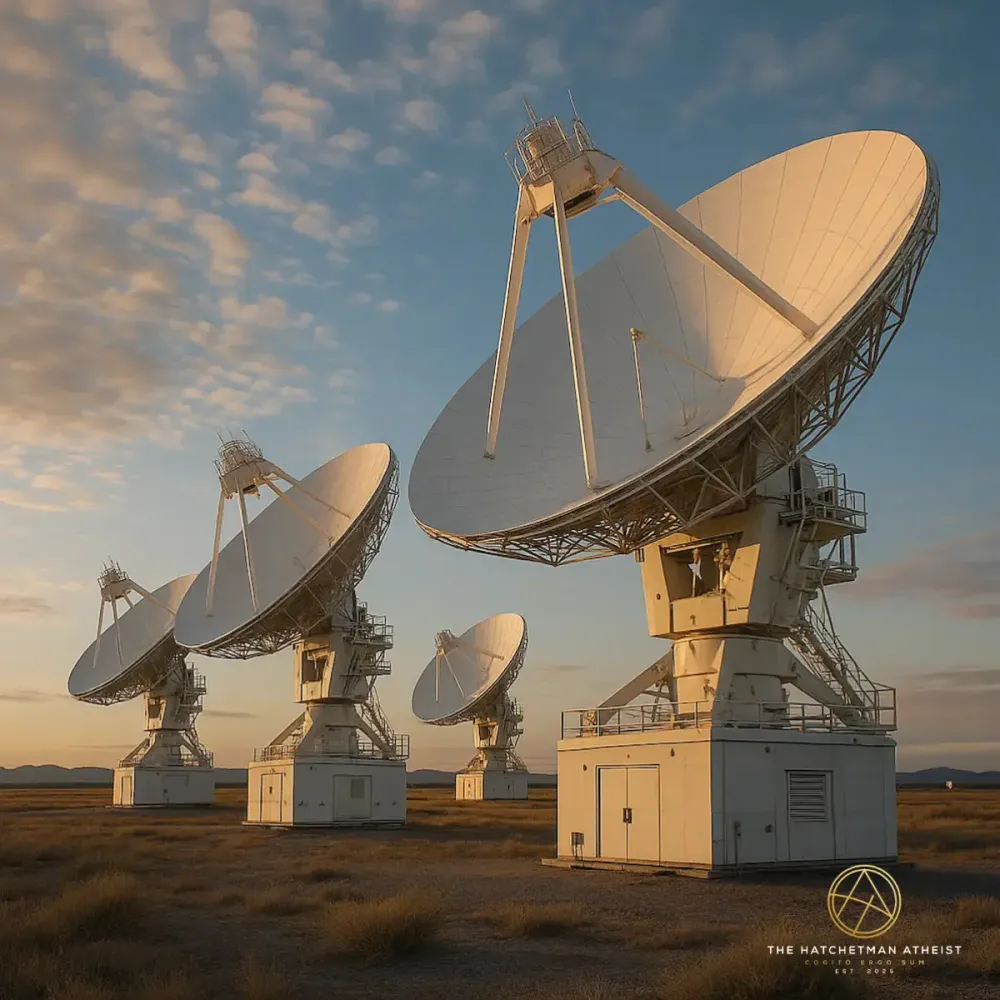
Even if intelligent civilizations sprout throughout the galaxy, the odds that two exist at the same time are depressingly low. Robin Hanson’s Great Filter framework points out that there are many steps between a lifeless planet and a species colonizing the galaxy, and any one of them can be nearly impossible to cross. The “temporal mismatch” version suggests we may have missed countless civilizations—some that died out before our planet formed, and others that won’t appear until long after we’re gone.
Astronomer Frank Drake, of Drake Equation fame, baked this into his famous probability model, and later work by Sara Seager and colleagues refined it for exoplanet detection: even if life is common, the technological overlap window is probably razor-thin. Physicist Enrico Fermi himself made the blunt point—if advanced civilizations were common and long-lived, we’d see evidence by now. The fact that we don’t suggests they’re either rare, short-lived, or both.
The Aliens We Wouldn’t Recognize
Let’s assume there are civilizations out there right now. That doesn’t mean we’d know them if we saw them. The “non-anthropocentric” solution to the paradox—explored by philosophers like Susan Schneider and astrobiologists such as Carol Cleland—argues that alien minds might operate in ways we simply can’t perceive. They could be post-biological machine intelligences, distributed neural networks, or lifeforms using sensory channels we don’t even have.
The Cambridge Non-Anthropocentric SETI Project notes that we’re biased toward searching for life like ours—radio signals, chemical markers of biology we recognize—when life may be signaling in entirely alien formats. In other words, the galaxy could be teeming with activity, and we’re just tuned to the wrong channel.
The Instinct That Eats Civilization
This is where I think the real bottleneck lives. All life is built on self-interest—find resources, avoid danger, reproduce. Intelligence doesn’t remove that wiring; it just equips you with more sophisticated tools to pursue the same goals.
Astrobiologist Olev Vinn has argued that inherited behavior patterns—the deeply rooted survival drives shaped by evolution—might themselves be the Great Filter. For ants, wasps, or bees, cooperation is genetically programmed. For intelligent species, it’s cultural, fragile, and constantly undermined by the older programming.
Nathan Sears calls this the anarchy–technology dilemma: our destructive capabilities mature faster than the global cooperation needed to manage them. Nick Bostrom’s Vulnerable World Hypothesis lands in the same place—humanity might invent a single catastrophic “black ball” technology that it can’t safely contain, and that’s game over.
When Logic Loses to Instinct
Logic can tell a civilization that destroying its biosphere is a bad idea. Instinct says, “Yes, but we need that profit, that land, that fuel, now.” In a straight fight, instinct wins. That’s fine if you’re a squirrel deciding whether to cross the road. It’s less fine if you’re a spacefaring species deciding whether to keep the planet habitable.
Biologist Peter Ward’s Medea Hypothesis pushes the knife in further: life tends to engineer its own destruction, whether by exhausting resources or destabilizing its environment. Ward applies it to Earth’s mass extinctions, but the principle scales to civilizations: given enough time and enough tools, they trip over their own evolutionary baggage.
Indifference, Avoidance, and the “They Just Don’t Care” Problem
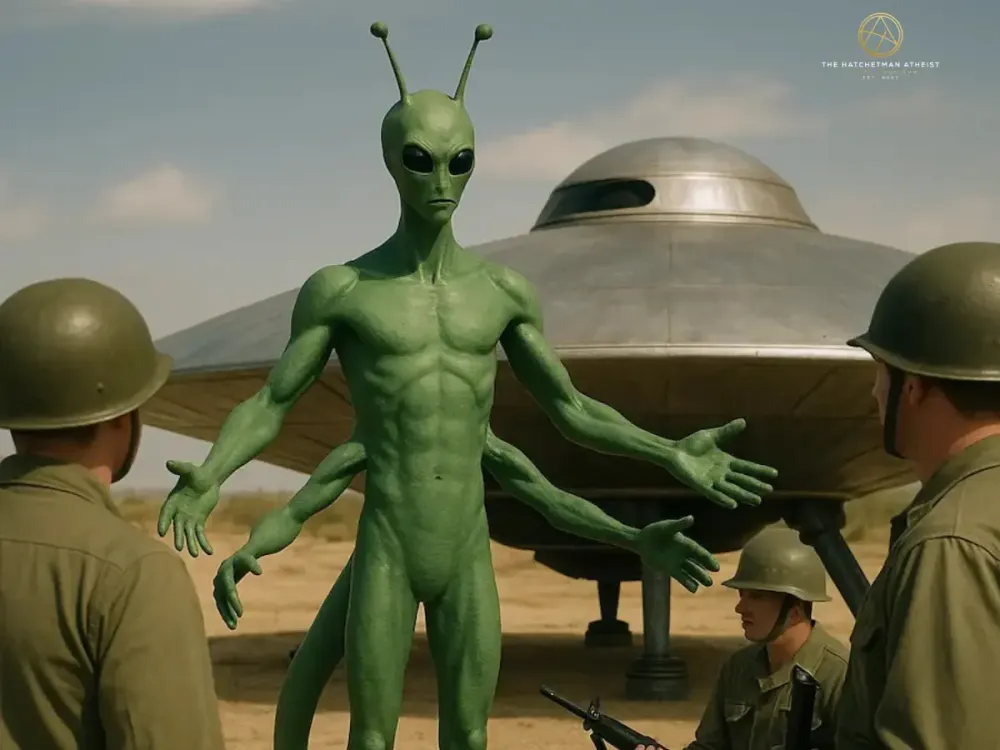
Some civilizations might make it through the Great Filter but still not talk to us. The Zoo Hypothesis, proposed by John Ball in 1973, suggests advanced civilizations could be deliberately avoiding contact—observing us but keeping their distance. The Dark Forest Hypothesis (from Liu Cixin’s novel but rooted in real game theory) takes a darker view: civilizations may hide out of fear, assuming any other intelligent species could be a threat.
Either way, the result is the same: silence.
Conclusion: The Enemy Is (Probably) Ourselves
If you stitch these threads together—temporal mismatch, alien incomprehensibility, and the evolutionary sabotage of self-interest—you get a bleak but consistent picture. Civilizations don’t collapse because they lack intelligence. They collapse because their intelligence is still chained to instincts designed for short-term survival. That combination may be the true Great Filter.
If this is right, then the reason we don’t see other civilizations is simple: they burn out fast. Maybe somewhere, a few have found a way through, learned to outsmart their instincts, and gone on to survive for millennia. If so, they’re either staying very quiet… or they look at us and decide we’re not ready for the galactic neighborhood. And honestly, they might have a point.