
Speaking in Tongues
Ecstatic speech didn’t begin with Pentecost. From shamans to sibyls to revivalists, people have long cried out with voices not entirely their own.
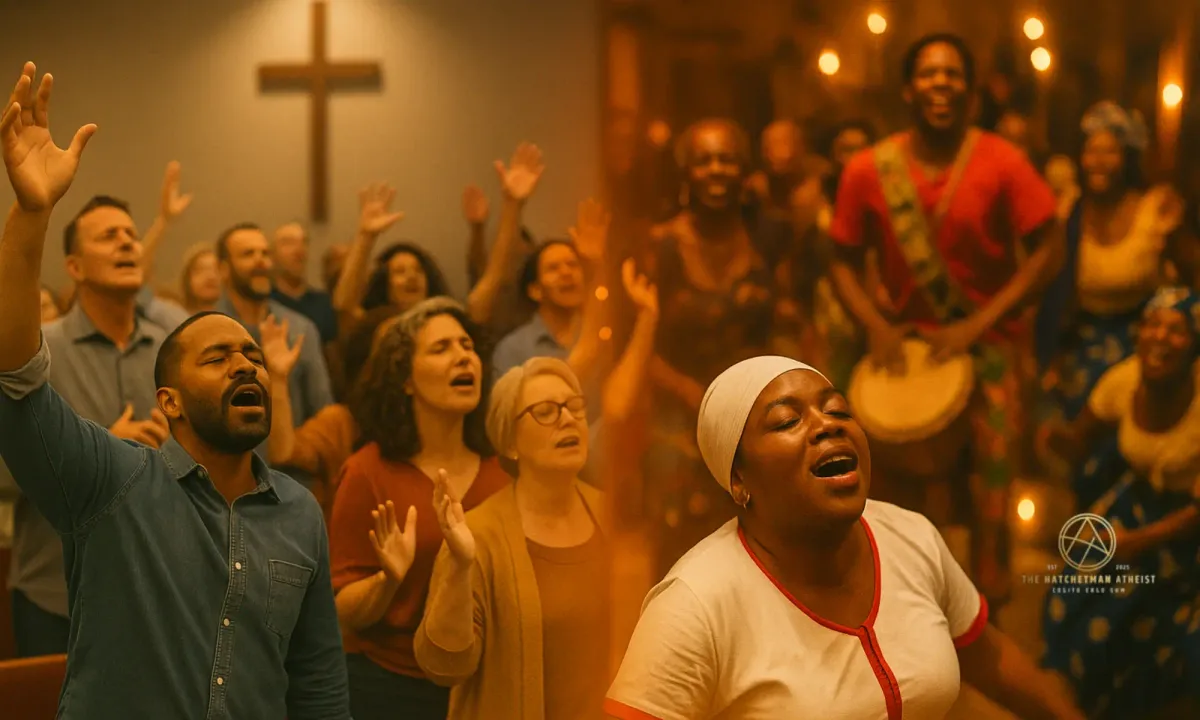
Ecstatic Utterance Before and Beyond Acts 2
Early Christians didn’t invent the sound of a voice slipping its leash. Acts 2 tells a tight, cinematic story, but it lands in a world already fluent in altered states—prophecy, possession, oracle, mantra, drum. Let’s set the scene, sort out what the New Testament actually says about “tongues,” glance at a few later revivals that echoed the same acoustics, and then map the broader, cross-cultural field of ecstatic utterance.
Setting the Scene: What Acts 2 Claims Happened
Before the festival of Pentecost, the disciples are gathered in an upper room, praying and waiting. “When the day of Pentecost had come, they were all together in one place.” Then comes the sensory overload: “a sound like the rush of a violent wind,” “divided tongues, as of fire,” and the line that launched a thousand debates: “All of them were filled with the Holy Spirit and began to speak in other languages, as the Spirit gave them ability.” On the street below, festival crowds from across the Mediterranean hear what sounds like their own languages: “each one heard them speaking in the native language of each.” (Acts 2:1–6, NSRVUE).
Taken at face value, Acts 2 describes xenolalia—recognizable foreign languages miraculously uttered and understood on the spot.
A Different Sound in Paul’s Letters
Decades earlier than Acts was written, Paul had already complained, coached, and cautioned his churches about “tongues.” His take: the speech is not inherently intelligible. “Those who speak in a tongue do not speak to other people but to God; for nobody understands them.” Public use requires an interpreter, or else quiet: “If there is no one to interpret, let them be silent in church.” (1 Cor. 14:2, 28, NSRVUE; see also 12–14).
That’s glossolalia—ecstatic, non-semantic utterance needing “interpretation,” not a mass linguistic miracle. And on the timeline, Paul’s letters (mid-50s CE) predate the composition of Acts (commonly dated toward the end of the first century). Some scholars therefore allow a sober possibility: the Pentecost story’s crowd-wide comprehension may be a legendary stylization remembered by later Christians, while the earliest, on-the-ground phenomenon in Corinth sounded closer to the cross-cultural pattern of ecstatic speech—moving, sincere, and largely unintelligible without an insider to frame it (Brown 312–18; Dunn 226–35; Samarin 56–77).
Bottom line: the New Testament itself gives you two scripts—Acts’ miracle of mutual comprehension, and Paul’s unruly prayer-speech that needs a translator.
After the Apostles: Revivals that Sound Familiar
Reports from the Anglo-American revivals supply post-apostolic, pre-Pentecostalist analogs. During the First Great Awakening, observers of George Whitefield and his circle described crowds with “outcries,” bodily collapse, convulsive weeping, and speech that witnesses called inarticulate or rapturous—religious intensity outrunning language (Edwards; Schmidt). In the nineteenth century, Charles Finney catalogued “overwhelming” scenes—shouts, sobs, unplanned vocal torrents—treated by participants as Spirit-prompted, even when propositions were scarce (Finney; Johnson). None of this proves glossolalia as a doctrine; it shows an acoustic family resemblance: when communities expect God, the room often starts to sound the same.
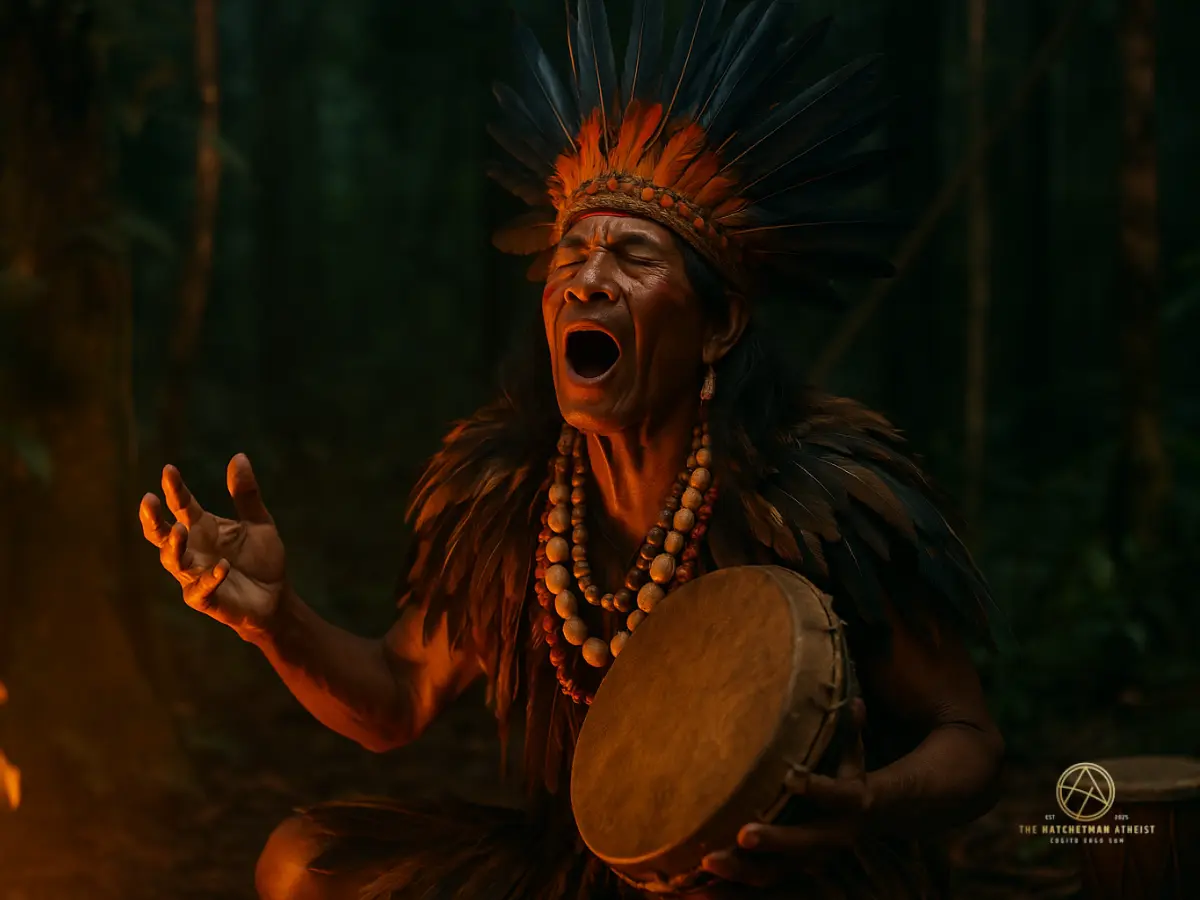
Catalogue of Ecstatic Utterance Across Cultures (Expanded)
Israelite Prophets and Second-Temple Judaism (Ancient Israel; Judea)
- Prophetic frenzy and group prophesying; heightened, inspired speech rather than foreign languages (1 Sam. 10:10; 1 Kgs. 18, NSRVUE).
- Testament of Job 48–50: Job’s daughters sing in “angelic dialects” during ecstatic praise (Charlesworth).
- Qumran: Songs of the Sabbath Sacrifice invite human participation in angelic liturgy—merging human and heavenly voice (Newsom; Jost).
Greco-Roman Mantic and Cultic Ecstasy (Greece; Mediterranean)
- Delphi’s Pythia: trance utterance rendered by interpreters—formally akin to “interpretation of tongues” (Plutarch; Ustinova).
- Dionysian rites: collective mania, shouted cries, rhythm-led vocal abandon (Dodds).
Montanists / “New Prophecy” (2nd-century Phrygia, Asia Minor)
- Prophetic ecstasy, oracles delivered in altered states, claimed as Spirit speech; contested by catholic leaders (Trevett).
Camisards / “French Prophets” (17th–18th-century Cévennes & England)
- Trance, convulsions, inspired oracles—rapid vocal outpourings during persecution and revival (Schwartz).
Jansenist Convulsionaries (18th-century France)
- Crisis-ecstasies at Saint-Médard with prophetic cries and oracular speech amid bodily convulsions (Maire).
Quakers and Shakers (17th–19th-century Britain & North America)
- Early Quakers: trembling and inspired vocal ministry; sometimes non-lexical cries (Braithwaite).
- Shakers: “gift” songs and spirit-dictated vocalizations during revival seasons (Stein).
Irvingites / Catholic Apostolic Church (1830s Britain)
- Reported tongues and interpretation in urban congregations during charismatic renewal (Flegg).
Great Awakening & Nineteenth-Century Revivals (Britain; North America)
- Whitefield-era reports of inarticulate outcries, collapse, rapturous speech (Edwards; Schmidt).
- Charles Finney’s meetings: shouted prayer, sobbing, vocal torrents read as spiritual overpowering (Finney; Johnson).
Yoruba / West-African–Derived Traditions (West Africa; Brazil; Cuba; Caribbean)
- Ifá/Candomblé/Santería: possession by orisha with divine voices—archaic registers, praise-names, or non-semantic cries (Bastide; Landes).
- Umbanda (Brazil): spirit-mediumship with altered voice and “spirit language” in urban temples (Bastide).
Haitian Vodou (Haiti; diaspora)
- Horse-and-rider possession; lwa “speak” through the mounted devotee; sound and cadence carry authority over semantics (Deren; Brown).
Zar / Bori Possession Cults (Sudan–Ethiopia–Egypt; Sahel/Nigeria)
- Negotiations with spirits; alternation between ordinary talk and glossolalic rushes; tone and rhythm read diagnostically (Boddy; Masquelier).
Shamanic Traditions (Siberia, Mongolia, Arctic, Amazonia, North America)
- Siberia/Evenki: spirit-talk, animal calls, altered timbre in trance (Eliade).
- Mongolian shamanism: possession oracles with archaic fragments (Hultkrantz).
- Saami noaidi; Nenets/Khanty: drum-led trance with spirit vocalizations (Rydving; Hoppál).
- Upper Amazon (Shipibo-Conibo and mestizo ayahuasca practice): ícaros “received” in visions, often with non-lexical syllables (Beyer, Singing to the Plants).
Native American Ceremonial Traditions (North America)
- Native American Church (peyote): songs “given” in ceremony; meaning lies in performance, not lexicon (Stewart).
- Plains rites (e.g., Lakota): vocables and cry-songs in altered states carry prayerful force (Rouget).
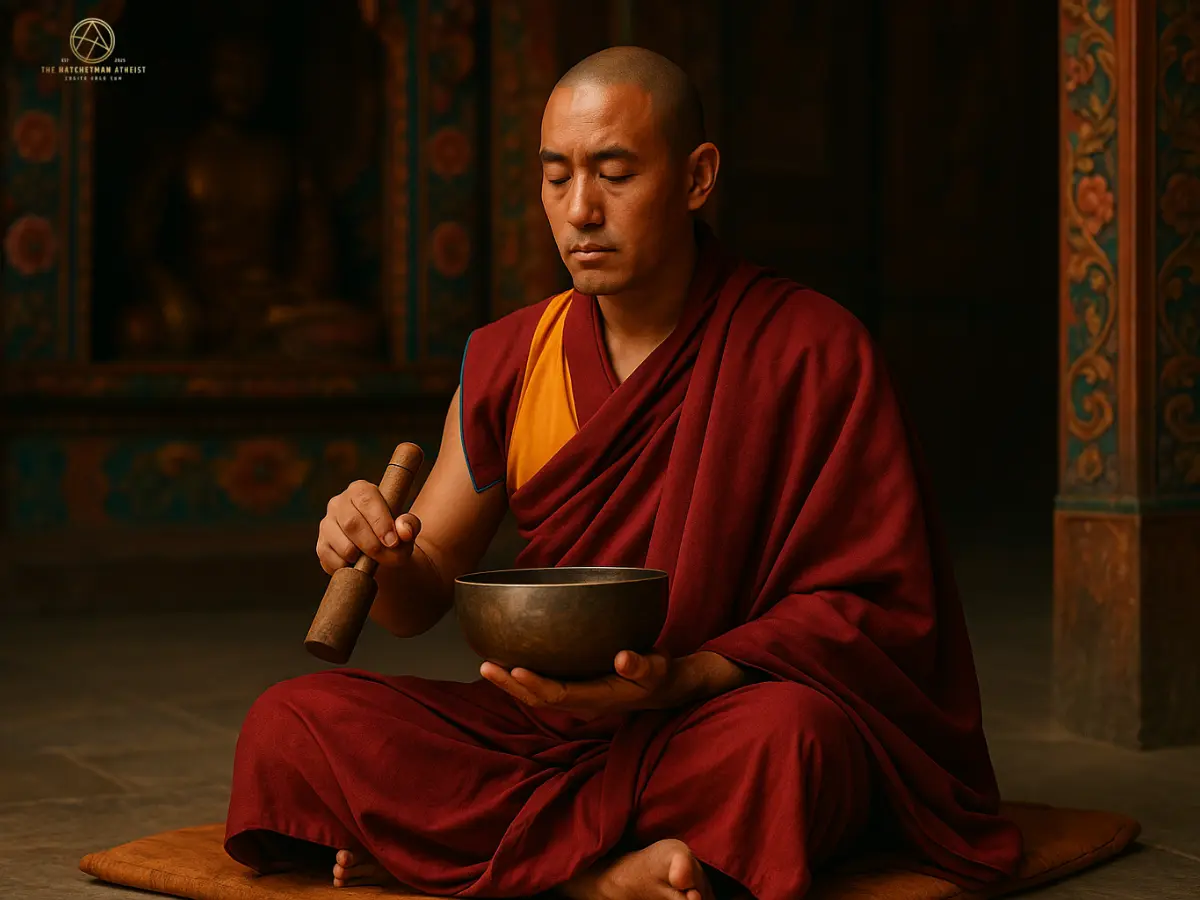
Tibetan Buddhism (Vajrayāna; Himalayas)
- Chöd and tantric retreats: spontaneous mantra streams/seed syllables in deep states—ecstatic yet lineage-disciplined (Beyer, Tārā; Samuel).
Hindu Bhakti and Tantra (South Asia)
- Kīrtan ecstasy: repetitive divine names culminating in sobbing cries and non-lexical phonation (White).
- Siddha-mantras reportedly “received” in trance—ritually potent, semantically opaque (Lorenzen).
Sufi Islam (Middle East; North Africa; South Asia)
- Dhikr and samāʿ: repetitive divine names leading to wajd (ecstasy), with shouted epithets and non-semantic cries (Schimmel; Trimingham).
Indonesia: Bali and Java (Southeast Asia)
- Bali (kerauhan; Barong/Kris): possession vocalization in altered timbre (Belo).
- Java (kejawen village rites): soft possession and whispered oracles (Beatty).
Korea: Muism (Korean Peninsula)
- Mudang in gut ceremonies deliver rapid, repetitive spirit speech; families interpret content (Kendall).
Myanmar & Thailand: Nat-kadaw and Phi Cults (Mainland Southeast Asia)
- Myanmar nat-kadaw: public possession oracles with spirit voices (Brac de la Perrière).
- Northeast Thailand phi cults: possession and chant-speech alongside Buddhist practice (Tambiah).
Chinese & Sinophone Southeast Asia: Tang-ki Spirit-Mediumship
- Trance oracles in Hokkien/Teochew temples; altered-voice proclamations during healing and divination (Dean; Clart).
Japan: Shinto Miko and Kuchiyose (Japan)
- Shrine mediums and spirit-calling séances; oracle-speech in possession states (Blacker).
If you find this work valuable and want to support future research and writing, including research and web-hosting costs, you can do so on patreon.
Works Cited (MLA)
Bastide, Roger. The African Religions of Brazil: Toward a Sociology of the Interpenetration of Civilizations. Johns Hopkins UP, 1978.
Beatty, Andrew. Varieties of Javanese Religion: An Anthropological Account. Cambridge UP, 1999.
Belo, Jane. Trance in Bali. Columbia UP, 1960.
Beyer, Stephan V. Singing to the Plants: A Guide to Mestizo Shamanism in the Upper Amazon. University of New Mexico Press, 2009.
— — —. The Cult of Tārā: Magic and Ritual in Tibet. University of California Press, 1978.
Blacker, Carmen. The Catalpa Bow: A Study of Shamanistic Practices in Japan. 2nd ed., Routledge, 1999.
Boddy, Janice. Wombs and Alien Spirits: Women, Men, and the Zar Cult in Northern Sudan. U of Wisconsin Press, 1989.
Braithwaite, William C. The Beginnings of Quakerism. 2nd ed., Cambridge UP, 1955.
Brown, Raymond E. An Introduction to the New Testament. Doubleday, 1997.
Brown, Karen McCarthy. Mama Lola: A Vodou Priestess in Brooklyn. Updated ed., U of California Press, 2001.
Charlesworth, James H., editor. The Old Testament Pseudepigrapha. Vol. 1, Doubleday, 1983.
Clart, Philip. “The Hagiography of Spirit-Mediums in Taiwan.” Journal of Chinese Religions, vol. 30, 2002, pp. 1–32.
Dean, Kenneth. Taoist Ritual and Popular Cult of Southeast China. Princeton UP, 1993.
Deren, Maya. Divine Horsemen: The Living Gods of Haiti. Thames and Hudson, 1953.
Dodds, E. R. The Greeks and the Irrational. U of California Press, 1951.
Dunn, James D. G. Jesus and the Spirit. Eerdmans, 1975.
Edwards, Jonathan. Some Thoughts Concerning the Present Revival of Religion in New England. 1742.
Finney, Charles G. Lectures on Revivals of Religion. 1835.
Flegg, Columba Graham. Gathered under Apostles: A Study of the Catholic Apostolic Church. Clarendon Press, 1992.
Hoppál, Mihály. Shamanism in Eurasia. Akademiai Kiado, 1984.
Hultkrantz, Åke. Shamanic Healing and Ritual Drama. Crossroad, 1992.
Johnson, Charles A. The Frontier Camp Meeting: Religion’s Harvest Time. U of Texas Press, 1955.
Jost, Matthias R. “The Liturgical Communion of the Yaḥad with the Angels.” Dead Sea Discoveries, vol. 29, no. 1, 2022, pp. 52–88.
Kendall, Laurel. Shamans, Nostalgias, and the IMF: South Korean Popular Religion in Motion. U of Hawai‘i Press, 2009.
Landes, Ruth. City of Women. U of New Mexico Press, 1994.
Lorenzen, David N. The Kāpālikas and Kālāmukhas: Two Lost Śaivite Sects. U of California Press, 1972.
Maire, Catherine. De la cause de Dieu à la cause de la Nation. Gallimard, 1998.
Masquelier, Adeline. Prayer Has Spoiled Everything: Possession, Power, and Identity in an Islamic Town of Niger. Duke UP, 2001.
Newsom, Carol A. Songs of the Sabbath Sacrifice. In The Dead Sea Scrolls: Hebrew, Aramaic, and Greek Texts with English Translations, vol. 4B, Mohr Siebeck/Westminster John Knox, 1999.
Plutarch. “On the Oracles of the Pythia” and “On the Obsolescence of Oracles.” In Moralia.
Rydving, Håkan. The End of Drum-Time: Religious Change among the Lule Saami, 1670s–1740s. Uppsala UP, 1995.
Samuel, Geoffrey. Civilized Shamans: Buddhism in Tibetan Societies. Smithsonian Institution Press, 1993.
Samarin, William J. Tongues of Men and Angels: The Religious Language of Pentecostalism. Macmillan, 1972.
Schimmel, Annemarie. Mystical Dimensions of Islam. U of North Carolina Press, 1975.
Schmidt, Leigh Eric. Holy Fairs: Scottish Communions and American Revivals in the Early Modern Period. Princeton UP, 1989.
Schwartz, Hillel. The French Prophets: The History of a Millenarian Group in Eighteenth-Century England. U of California Press, 1980.
Stein, Stephen J. The Shaker Experience in America. Yale UP, 1992.
Tambiah, Stanley Jeyaraja. Buddhism and the Spirit Cults of Northeast Thailand. Cambridge UP, 1970.
Trevett, Christine. Montanism: Gender, Authority and the New Prophecy. Cambridge UP, 1996.
Ustinova, Yulia. Divine Mania: Alteration of Consciousness in Ancient Greece. Routledge, 2018.
Biblical citations from the New Revised Standard Version Updated Edition (NRSVUE).