Pascal's Wager: Bad Thinking From a Brilliant Mind
Pascal’s Wager looks clever on the surface, but falls apart under scrutiny. Belief isn’t a light switch, the argument stacks the deck, and what passes for logic is mostly performance.
𝐿𝑒𝑡 𝑢𝑠 𝑤𝑒𝑖𝑔ℎ 𝑡ℎ𝑒 𝑔𝑎𝑖𝑛 𝑎𝑛𝑑 𝑡ℎ𝑒 𝑙𝑜𝑠𝑠 𝑖𝑛 𝑤𝑎𝑔𝑒𝑟𝑖𝑛𝑔 𝑡ℎ𝑎𝑡 𝐺𝑜𝑑 𝑒𝑥𝑖𝑠𝑡𝑠. 𝐿𝑒𝑡 𝑢𝑠 𝑒𝑠𝑡𝑖𝑚𝑎𝑡𝑒 𝑡ℎ𝑒𝑠𝑒 𝑡𝑤𝑜 𝑐ℎ𝑎𝑛𝑐𝑒𝑠. 𝐼𝑓 𝑦𝑜𝑢 𝑔𝑎𝑖𝑛, 𝑦𝑜𝑢 𝑔𝑎𝑖𝑛 𝑎𝑙𝑙; 𝑖𝑓 𝑦𝑜𝑢 𝑙𝑜𝑠𝑒, 𝑦𝑜𝑢 𝑙𝑜𝑠𝑒 𝑛𝑜𝑡ℎ𝑖𝑛𝑔. 𝑊𝑎𝑔𝑒𝑟, 𝑡ℎ𝑒𝑛, 𝑤𝑖𝑡ℎ𝑜𝑢𝑡 ℎ𝑒𝑠𝑖𝑡𝑎𝑡𝑖𝑜𝑛, 𝑡ℎ𝑎𝑡 𝐻𝑒 𝑒𝑥𝑖𝑠𝑡𝑠. “𝑇ℎ𝑎𝑡 𝑖𝑠 𝑣𝑒𝑟𝑦 𝑓𝑖𝑛𝑒. 𝑌𝑒𝑠, 𝐼 𝑚𝑢𝑠𝑡 𝑤𝑎𝑔𝑒𝑟; 𝑏𝑢𝑡 𝑝𝑒𝑟ℎ𝑎𝑝𝑠 𝐼 𝑤𝑎𝑔𝑒𝑟 𝑡𝑜𝑜 𝑚𝑢𝑐ℎ.” 𝐿𝑒𝑡 𝑢𝑠 𝑠𝑒𝑒. 𝑆𝑖𝑛𝑐𝑒 𝑡ℎ𝑒𝑟𝑒 𝑖𝑠 𝑒𝑞𝑢𝑎𝑙 𝑟𝑖𝑠𝑘 𝑜𝑓 𝑔𝑎𝑖𝑛 𝑎𝑛𝑑 𝑜𝑓 𝑙𝑜𝑠𝑠, 𝑖𝑓 𝑦𝑜𝑢 ℎ𝑎𝑑 𝑜𝑛𝑙𝑦 𝑡𝑤𝑜 𝑙𝑖𝑣𝑒𝑠 𝑡𝑜 𝑤𝑖𝑛, 𝑦𝑜𝑢 𝑚𝑖𝑔ℎ𝑡 𝑠𝑡𝑖𝑙𝑙 𝑤𝑎𝑔𝑒𝑟; 𝑖𝑓 𝑡ℎ𝑒𝑟𝑒 𝑤𝑒𝑟𝑒 𝑡ℎ𝑟𝑒𝑒 𝑙𝑖𝑣𝑒𝑠 𝑡𝑜 𝑤𝑖𝑛, 𝑦𝑜𝑢 𝑤𝑜𝑢𝑙𝑑 𝑠𝑡𝑖𝑙𝑙 ℎ𝑎𝑣𝑒 𝑡𝑜 𝑝𝑙𝑎𝑦 (𝑠𝑖𝑛𝑐𝑒 𝑦𝑜𝑢 𝑚𝑢𝑠𝑡 𝑝𝑙𝑎𝑦), 𝑎𝑛𝑑 𝑖𝑡 𝑤𝑜𝑢𝑙𝑑 𝑏𝑒 𝑖𝑚𝑝𝑟𝑢𝑑𝑒𝑛𝑡 𝑛𝑜𝑡 𝑡𝑜 𝑠𝑡𝑎𝑘𝑒 𝑦𝑜𝑢𝑟 𝑙𝑖𝑓𝑒 𝑡𝑜 𝑤𝑖𝑛 𝑡ℎ𝑟𝑒𝑒 𝑖𝑛 𝑎 𝑔𝑎𝑚𝑒 𝑤ℎ𝑒𝑟𝑒 𝑡ℎ𝑒 𝑐ℎ𝑎𝑛𝑐𝑒𝑠 𝑎𝑟𝑒 𝑒𝑞𝑢𝑎𝑙. 𝐵𝑢𝑡 𝑡ℎ𝑒𝑟𝑒 𝑖𝑠 𝑎𝑛 𝑒𝑡𝑒𝑟𝑛𝑖𝑡𝑦 𝑜𝑓 𝑙𝑖𝑓𝑒 𝑎𝑛𝑑 ℎ𝑎𝑝𝑝𝑖𝑛𝑒𝑠𝑠. 𝑇ℎ𝑎𝑡 𝑏𝑒𝑖𝑛𝑔 𝑠𝑜, 𝑖𝑓 𝑡ℎ𝑒𝑟𝑒 𝑤𝑒𝑟𝑒 𝑎𝑛 𝑖𝑛𝑓𝑖𝑛𝑖𝑡𝑦 𝑜𝑓 𝑐ℎ𝑎𝑛𝑐𝑒𝑠, 𝑜𝑓 𝑤ℎ𝑖𝑐ℎ 𝑜𝑛𝑙𝑦 𝑜𝑛𝑒 𝑤𝑒𝑟𝑒 𝑖𝑛 𝑦𝑜𝑢𝑟 𝑓𝑎𝑣𝑜𝑟, 𝑦𝑜𝑢 𝑤𝑜𝑢𝑙𝑑 𝑠𝑡𝑖𝑙𝑙 𝑑𝑜 𝑤𝑒𝑙𝑙 𝑡𝑜 𝑠𝑡𝑎𝑘𝑒 𝑜𝑛𝑒 𝑡𝑜 𝑔𝑎𝑖𝑛 𝑡𝑤𝑜; 𝑎𝑛𝑑 𝑦𝑜𝑢 𝑤𝑜𝑢𝑙𝑑 𝑎𝑐𝑡 𝑟𝑖𝑔ℎ𝑡𝑙𝑦 𝑡𝑜 𝑟𝑖𝑠𝑘 𝑤ℎ𝑎𝑡 𝑖𝑠 𝑓𝑖𝑛𝑖𝑡𝑒 𝑓𝑜𝑟 𝑡ℎ𝑒 𝑠𝑎𝑘𝑒 𝑜𝑓 𝑤ℎ𝑎𝑡 𝑖𝑠 𝑖𝑛𝑓𝑖𝑛𝑖𝑡𝑒
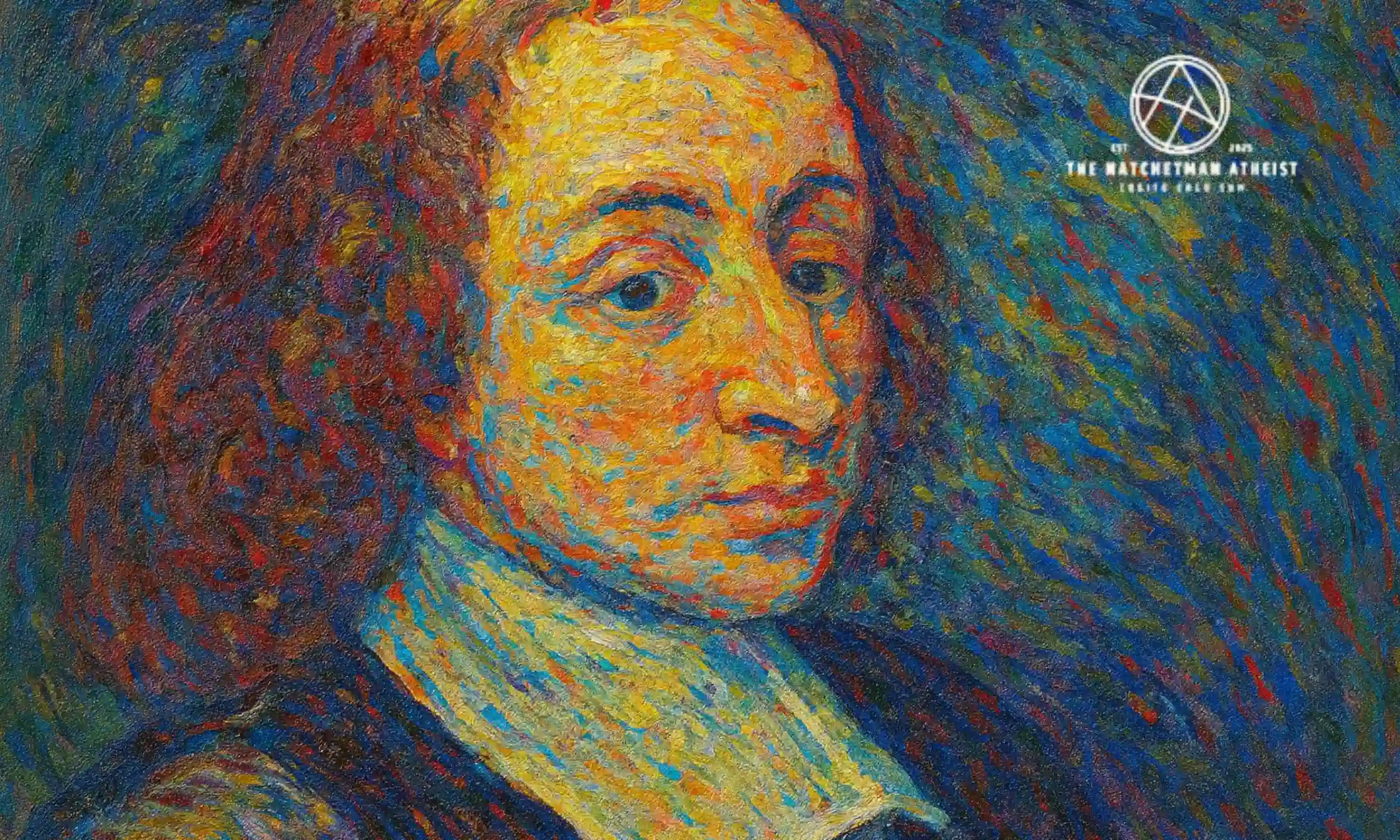
Blaise Pascal
Blaise Pascal was a 17th-century prodigy—mathematician, inventor of an early mechanical calculator, and pioneer of fluid mechanics—who died at 39 leaving the unfinished Pensées. Despite his contributions to mathematics and science, it is the logical trainwreck of Pascal’s Wager for which he is most often remembered:
“𝐿𝑒𝑡 𝑢𝑠 𝑤𝑒𝑖𝑔ℎ 𝑡ℎ𝑒 𝑔𝑎𝑖𝑛 𝑎𝑛𝑑 𝑡ℎ𝑒 𝑙𝑜𝑠𝑠 𝑖𝑛 𝑤𝑎𝑔𝑒𝑟𝑖𝑛𝑔 𝑡ℎ𝑎𝑡 𝐺𝑜𝑑 𝑖𝑠. … 𝐼𝑓 𝑦𝑜𝑢 𝑔𝑎𝑖𝑛, 𝑦𝑜𝑢 𝑔𝑎𝑖𝑛 𝑎𝑙𝑙; 𝑖𝑓 𝑦𝑜𝑢 𝑙𝑜𝑠𝑒, 𝑦𝑜𝑢 𝑙𝑜𝑠𝑒 𝑛𝑜𝑡ℎ𝑖𝑛𝑔. 𝑊𝑎𝑔𝑒𝑟 𝑡ℎ𝑒𝑛 𝑡ℎ𝑎𝑡 𝐻𝑒 𝑖𝑠, 𝑤𝑖𝑡ℎ𝑜𝑢𝑡 ℎ𝑒𝑠𝑖𝑡𝑎𝑡𝑖𝑜𝑛" (Pensées §233).
In outline, if the Christian God exists and you believe, the payoff is infinite; if he does not and you still believe, the cost is finite; therefore, bet on belief. Slick and simple at first glance—until you lift the hood and find a pile of assumptions and cognitive shortcuts that don’t survive scrutiny.
There are easily a dozen reasons, probably more, to dismiss Pascal’s Wager. Pascal was a genius in math and science, no question but in the realm of logic and philosophy, he was a child. Einstein couldn’t fix a carburetor, Newton couldn’t carve a statue, and Pascal should have left logic to people who knew the terrain. So, Pascal’s first mistake was that he chose to violate the valuable life maxim “stay in your lane”.
𝐻𝑒𝑦 𝐵𝑙𝑎𝑖𝑠𝑒, 𝑖𝑓 𝐼 𝑛𝑒𝑒𝑑 𝑡𝑜 𝑏𝑢𝑖𝑙𝑑 𝑎 𝑚𝑒𝑐ℎ𝑎𝑛𝑖𝑐𝑎𝑙 𝑐𝑎𝑙𝑐𝑢𝑙𝑎𝑡𝑜𝑟, 𝐼 𝑤𝑖𝑙𝑙 𝑐𝑎𝑙𝑙 𝑦𝑜𝑢, 𝑏𝑢𝑡 𝑓𝑜𝑟 𝑙𝑜𝑔𝑖𝑐, 𝐼 𝑎𝑚 𝑙𝑜𝑠𝑖𝑛𝑔 𝑦𝑜𝑢𝑟 𝑛𝑢𝑚𝑏𝑒𝑟.
I’ll cover the laundry list of problems in an appendix, but here I want to zero in on a couple of points that stick out most to me.
Belief as a Choice
Pascal treats belief as if it were something you can just decide to put on, like a coat. But belief doesn’t work that way. You can act like you believe—show up at church, repeat the words, bow your head when everyone else does—but that doesn’t mean you actually believe. It just means you’re playing the part.
It sounds simple, but crack it open and you hit the core of Christian belief. Too often Christianity is performance, not piety—especially in apologetics. The apologist’s aim is less saving souls than displaying mastery to gain status among peers. The confidence is often staged; the show props up the group and keeps the story intact. As the Christian site, 1517.org puts it:
𝑎𝑝𝑜𝑙𝑜𝑔𝑒𝑡𝑖𝑐𝑠 𝑡𝑒𝑛𝑑𝑠 𝑡𝑜 𝑏𝑒 𝑎 𝑝𝑒𝑟𝑓𝑜𝑟𝑚𝑎𝑛𝑐𝑒 𝑟𝑎𝑡ℎ𝑒𝑟 𝑡ℎ𝑎𝑛 𝑎𝑛 𝑎𝑢𝑡ℎ𝑒𝑛𝑡𝑖𝑐 𝑑𝑖𝑎𝑙𝑜𝑔, 𝑎𝑛 𝑒𝑥𝑒𝑟𝑐𝑖𝑠𝑒 𝑖𝑛 𝑏𝑒𝑖𝑛𝑔 𝑐𝑙𝑒𝑣𝑒𝑟 𝑟𝑎𝑡ℎ𝑒𝑟 𝑡𝘩𝑎𝑛 𝑏𝑒𝑖𝑛𝑔 𝑐𝑜𝑚𝑝𝑒𝑙𝑙𝑖𝑛𝑔, 𝑎𝑛𝑑 𝑎 𝑠𝑜𝑢𝑟𝑐𝑒 𝑜𝑓 𝑠𝑒𝑙𝑓-𝑠𝑎𝑡𝑖𝑠𝑓𝑎𝑐𝑡𝑖𝑜𝑛 𝑟𝑎𝑡ℎ𝑒𝑟 𝑡𝘩𝑎𝑛 𝑎𝑛 𝑖𝑛𝑣𝑖𝑡𝑎𝑡𝑖𝑜𝑛 𝑡𝑜 𝑟𝑖𝑠𝑘𝑦 𝑏𝑢𝑡 𝑟𝑒𝑠𝑝𝑒𝑐𝑡𝑓𝑢𝑙 𝑒𝑛𝑔𝑎𝑔𝑒𝑚𝑒𝑛𝑡 (Mallinson).
The real function isn’t to persuade skeptics, but to boost the apologist’s prestige and steady fellow believers, preserving the community. Because if the community slips, the apologist must face the possibility that they’re wrong—and that their life rests on a fantasy. The fight isn’t on a debate stage; it’s inside the apologist’s psyche.
That’s why Pascal’s “just believe” pitch feels hollow. If you “believe” because it might pay off, that isn’t belief—it’s hedging your bets. Christianity says it values honesty of the heart, but the Wager pushes you toward pretending. It’s costume over conviction, performance over truth. And if there is a God who actually cares about honesty, that kind of hedged, self-serving faith seems more like a mark against you than a point in your favor.

The Stacked Deck
Pascal’s next mistake is stacking the deck. He assumes Christianity is the natural starting point, the home team, and everything else just fades into the background. With one sweep of his hand, Muslims, Hindus, Buddhists, Jews, Sikhs, atheists, agnostics, deists—everyone who isn’t in his particular version of Christianity—disappears. Even within Christianity itself, the hundreds of denominations and variations are ignored. Pascal’s game is rigged before it even begins.
Why? Because of two overlapping biases. First, the availability heuristic (Tversky and Kahneman): people assume the thing they can recall most easily must be the most important. Second, parochial bias: the tendency to treat whatever is normal in your culture as the universal standard. Put those together and you get Pascal’s starting assumption: “Christianity is what I know, therefore it is the natural option for everyone.”
From there, he reduces the whole question to a false dichotomy: Christianity or atheism. Two doors, pick one. But reality has tens of thousands of doors, not two. And Pascal not only crowns Christianity as the stand-in for all religions, but crowns his particular brand of Christianity—eternal torment in hell vs. eternal joy in paradise--as the default. That isn’t analysis. It’s arrogance.
So in the end, Pascal’s Wager looks clever on the surface, but under the hood it’s just a pile of shortcuts: fake belief, stacked assumptions, cultural bias, and a choice that’s been rigged before the dice are even rolled.
Hey, Blaise! Stick to pressure and fluid dynamics and leave logic alone! You obviously aren’t cut out for it.
Works Cited
Mallinson, Jeff. “What’s Wrong with Apologetics: Embarrassment (Part 5).” 1517, 29 Jan. 2015, www.1517.org/articles/whats-wrong-with-apologetics-embarrassment-part-5.
Pascal, Blaise. Pensées. Translated by Roger Ariew, Hackett Publishing, 2005.
Tversky, Amos, and Daniel Kahneman. “Availability: A Heuristic for Judging Frequency and Probability.” Cognitive Psychology, vol. 5, no. 2, 1973, pp. 207–232.
Appendix: Why Pascal’s Wager Falls Apart — In Plain Language
Below are the main problems with the Wager, explained for readers who haven’t taken a logic class. I’ve split them into two groups: first the logic mistakes (how the argument itself is built), then the psychology mistakes (how our minds get tricked while thinking about it).
I. Logic mistakes (how the argument is put together)
- Appeal to consequences (confusing “nice outcome” with “true claim”)
What the Wager does: “If you believe and God exists, you get infinite bliss. If you don’t and God exists, you get infinite loss. So believe.”
Plain problem: Whether a claim is comfortable or scary doesn’t tell us if it’s true. Wanting a prize isn’t evidence the prize is real.
Why it fails: Good or bad outcomes are about rewards, not reality. Truth needs reasons or evidence, not wishful payoffs (Hume; Clifford). - False either–or (hiding all the other doors)
What the Wager does: Acts like there are only two choices: Christianity or atheism.
Plain problem: The world has many religions (and many versions of each). If even one of them says your wagered belief is the wrong kind and gets punished, the “safe bet” stops being safe.
Why it fails: Once you admit multiple possible gods and rules, there’s no single choice that wins in every scenario. The neat two-box chart explodes into many boxes (Hájek). - Assuming the very payoffs that need proving
What the Wager does: Builds in “heaven forever for believers, hell forever for unbelievers” as if that were already settled.
Plain problem: That payoff table is the whole debate. You can’t just assume it and then use it to prove itself.
Why it fails: If heaven/hell don’t exist, or they don’t track mere belief, the “best bet” reasoning collapses. - Treating belief like a light switch (you can’t just decide to believe)
What the Wager does: Tells you to choose belief because it pays.
Plain problem: We don’t pick beliefs the way we pick socks. You can act like you believe, but that isn’t the same as actually believing.
Why it fails: Many theologies say God sees the heart; pretend belief to win a prize isn’t the belief they claim to value (Williams). - Misusing “dominance” (claiming one choice beats all others in every case)
What the Wager does: Says believing in Christianity is better no matter what.
Plain problem: That only works if the same choice is best in every possible world. It isn’t, once you include rival religions or gods who punish wager-motivated belief.
Why it fails: No single action dominates across all the live possibilities (Hájek). - The “infinity” trick (infinite prizes break the math)
What the Wager does: Uses infinite reward to drown out every cost.
Plain problem: If any religion offers infinite reward and has even a tiny chance of being true, it ties or beats all the others. Now every faith with “infinite heaven” wins at once. The comparison stops working.
Why it fails: When infinities enter, expected-value math can’t tell you which choice is actually better; it becomes undefined or trivial (“Pascal’s Mugging”). - Pretending “finite cost” means “no cost”
What the Wager does: Says if God isn’t real, believers “lose nothing.”
Plain problem: “Finite” is not “nothing.” A lifetime of time, money, obedience, social commitments, and foregone options is not zero.
Why it fails: Real-world costs matter in real-world decisions. Waving them away doesn’t make them vanish. - Vague labels (undefined “God,” “belief,” and “reward”)
What the Wager does: Leaves the key terms so fuzzy they can fit almost anything.
Plain problem: If a claim can explain any outcome, it explains no particular outcome.
Why it fails: Unclear aims and rules let the defender move the goalposts. That’s not an explanation; it’s an escape hatch (Sober). - Sincerity problem (rewarding the mask, not the mind)
What the Wager does: Encourages outward conformity for payoff reasons.
Plain problem: If a god values honesty, betting-faith is hypocrisy.
Why it fails: On many theologies, insincere belief counts against you, not for you. - Making up the starting odds (priors)
What the Wager does: Treats the local faith as the default live option with decent odds.
Plain problem: That’s not argued; it’s assumed. “Familiar” isn’t the same as “likely.”
Why it fails: Without principled starting probabilities, you can “prove” any faith by bumping its odds. That’s not reasoning; it’s preference dressed as math (Kahneman; Tversky & Kahneman). - Mixing two different kinds of “rational” (prudence vs. truth)
What the Wager does: Slides from “it’s safer to act as if” to “it’s rational to believe.”
Plain problem: There’s a difference between a practical reason to behave a certain way and an epistemic reason to think something is true.
Why it fails: Even if it’s prudent to hedge, that doesn’t make the belief true or epistemically justified (Clifford; contrast James). - The “how many options?” problem (no clean way to count and weigh)
What the Wager does: Pretends the choice set is small and simple.
Plain problem: There are endlessly many gods and rule-sets you could define. There’s no non-arbitrary way to count and weight them.
Why it fails: If you can’t fairly measure the option space, the “expected value” comparison is a mirage (Hájek).
II. Mind-tricks and habits of thought (how our psychology gets fooled)
- Availability heuristic (what’s easy to recall feels more likely)
How it shows up: Christianity feels like the obvious live option because it’s familiar in your culture.
Why it matters: Familiarity isn’t probability. Our brains mistake “comes to mind fast” for “probably true” (Kahneman; Tversky & Kahneman). - Parochial / in-group bias (my normal = the world’s normal)
How it shows up: Treating your local faith as the default starting point for everyone.
Why it matters: It quietly erases the “many gods” problem and rigs the table. - Loss aversion (losses loom larger than gains)
How it shows up: The fear of hell (infinite loss) overwhelms every finite cost of believing.
Why it matters: Fear-weighted choices feel “rational” even when the evidence is thin. - Framing effect (how it’s presented changes how it feels)
How it shows up: Packaging the choice as “infinite gain vs. tiny cost.”
Why it matters: Change the frame—add real costs and rival religions—and the “obvious” choice stops being obvious. - Black-and-white thinking (false simplicity)
How it shows up: Forcing “Christianity or atheism” when reality has many live options.
Why it matters: Binaries are tidy; the world is not. - Confirmation and motivated reasoning (we lean where we want to land)
How it shows up: Preferring a setup where your tradition wins by “math.”
Why it matters: Desire shapes both the options you count and the payoffs you assign (Nickerson; Kunda). - Default effect (stick with what you inherited)
How it shows up: Calling the familiar path “the safe bet.”
Why it matters: Defaults feel right even when the reasons are weak. - Scope neglect (underestimating long-run costs)
How it shows up: Shrinking a lifetime of commitments into “meh, it’s only finite.”
Why it matters: Small costs, repeated for decades, are not small. - Overconfidence (too sure about a shaky setup)
How it shows up: Acting as if the priors, payoffs, and option set were settled.
Why it matters: The more complex the assumptions, the less certainty you should claim. - Appeal to fear (emotion as evidence)
How it shows up: Hell imagery or social loss used to push the bet.
Why it matters: Fear can move behavior; it can’t establish truth.
Works Cited
Clifford, W. K. The Ethics of Belief. 1877. Prometheus Books, 1999.
Hájek, Alan. “Pascal’s Wager.” The Stanford Encyclopedia of Philosophy, edited by Edward N. Zalta, Winter 2023 ed.
Hume, David. Dialogues Concerning Natural Religion. 1779. Oxford University Press, 1993.
James, William. The Will to Believe and Other Essays in Popular Philosophy. Longmans, Green, and Co., 1897.
Kahneman, Daniel. Thinking, Fast and Slow. Farrar, Straus and Giroux, 2011.
Kunda, Ziva. “The Case for Motivated Reasoning.” Psychological Bulletin, vol. 108, no. 3, 1990, pp. 480–498.
Mackie, J. L. The Miracle of Theism: Arguments for and against the Existence of God. Oxford University Press, 1982.
Nickerson, Raymond S. “Confirmation Bias: A Ubiquitous Phenomenon in Many Guises.” Review of General Psychology, vol. 2, no. 2, 1998, pp. 175–220.
Pascal, Blaise. Pensées. Translated by A. J. Krailsheimer, Penguin Classics, 1995.
Sober, Elliott. Evidence and Evolution: The Logic Behind the Science. Cambridge University Press, 2008.
Tversky, Amos, and Daniel Kahneman. “Judgment under Uncertainty: Heuristics and Biases.” Science, vol. 185, no. 4157, 1974, pp. 1124–1131.Works Cited (MLA)
Clifford, W. K. The Ethics of Belief. 1877. Prometheus Books, 1999.
Hájek, Alan. “Pascal’s Wager.” The Stanford Encyclopedia of Philosophy, edited by Edward N. Zalta, Winter 2023 ed.
Hume, David. An Enquiry Concerning Human Understanding. 1748. Edited by Tom L. Beauchamp, Oxford University Press, 1999.
James, William. The Will to Believe and Other Essays in Popular Philosophy. Longmans, Green, and Co., 1897.
Kahneman, Daniel, and Amos Tversky. “Prospect Theory: An Analysis of Decision under Risk.” Econometrica, vol. 47, no. 2, 1979, pp. 263–291.
Kunda, Ziva. “The Case for Motivated Reasoning.” Psychological Bulletin, vol. 108, no. 3, 1990, pp. 480–498.
Nickerson, Raymond S. “Confirmation Bias: A Ubiquitous Phenomenon in Many Guises.” Review of General Psychology, vol. 2, no. 2, 1998, pp. 175–220.
Pascal, Blaise. Pensées. Translated by A. J. Krailsheimer, Penguin Classics, 1995.
Sober, Elliott. Evidence and Evolution: The Logic Behind the Science. Cambridge University Press, 2008.
Tversky, Amos, and Daniel Kahneman. “Judgment under Uncertainty: Heuristics and Biases.” Science, vol. 185, no. 4157, 1974, pp. 1124–1131.