Western vs. Indian NDEs: Proof the Afterlife is Culturally Constructed
If NDEs were a window into an objective reality, they would look the same everywhere. But while Westerners see tunnels of light, Indian experiencers encounter bureaucratic offices and clerical errors. Discover why the "afterlife" is a mirror of our own culture.
Key Takeaways
-
The Afterlife is Local: If NDEs were a window into a real, external world, they would look the same to everyone. Instead, they are highly localized. Westerners see tunnels, while Indians often see clerical offices and messengers.
-
The “Clerical Error” Proof: In many non-Western NDEs, the experiencer is sent back not because of unconditional love, but because of a bureaucratic mistake (for example, the wrong person was taken). This mirrors local cultural institutions, not a divine reality.
-
Living “Ghosts” Are Diagnostic: The presence of people who are actually still alive during an NDE is a smoking gun for the cognitive model. It shows the brain is simulating a narrative based on relevance, not visiting a location based on fact.
-
The “Guide” Is a Template: The brain provides a structural slot for a companion or guide to help process the experience. Culture supplies the face—whether it is an angel, a deceased grandmother, or a Hindu official.
-
Meaning vs. Reality: An experience can be life-changing and deeply meaningful without being factually true. NDEs are powerful internal simulations generated by a brain under extreme pressure, using the only tools it has: memory, emotion, and belief.
Table of Contents
- Near-Death Experiences Are Culturally Constructed
- The Western Near-Death Experience Pattern
- Indian Near-Death Experiences and Administrative Error
- Far Eastern Patterns (Where Data Exist)
- Methodological Context
- Seeing People Who Are Not Dead Yet
- Guides, Authority Figures, and Narrative Roles
- Pattern, Not Randomness
- What Cultural Variation Shows
- Footnotes
- Works Cited
Near-Death Experiences Are Culturally Constructed
Near-death experiences are often presented as windows into a single, objective afterlife—brief access to a shared reality revealed when the body fails. If that were the case, we would expect a basic level of cross-cultural stability. Interpretations might vary, but the underlying landscape should remain recognizable.
That is not what the literature shows.
Instead, near-death experiences display strong and repeatable cultural patterning. The structure of the experience—who appears, what happens, how judgment works, and why the experiencer returns—varies systematically across societies. These are not superficial interpretive differences layered onto a universal core. They are differences in the experience itself.
This article is part of a neuroscience-based examination of near-death experiences. The foundational overview—explaining why the brain is not shut down during NDEs—can be read here:
The Western Near-Death Experience Pattern
Research conducted in the United States and Western Europe consistently shows that near-death experiences tend to follow a recognizable structure. This is not an impressionistic claim but one grounded in decades of survey-based and clinical research.
One of the most influential tools in the field is Bruce Greyson’s Near-Death Experience Scale, which identifies recurring components across Western reports: altered perception of time, feelings of peace or joy, separation from the body, movement through darkness or space, encounters with beings, and panoramic life review.¹ Kenneth Ring and subsequent researchers similarly emphasized patterned stages rather than random hallucination.²
Within Western samples, experiencers frequently report encounters with deceased relatives or benevolent figures interpreted as angels, religious beings, or guides. Moral evaluation—when present—is typically framed therapeutically: reflection on one’s life, relationships, and emotional impact rather than formal judgment.
Because this pattern is so familiar, it is often treated as the near-death experience. It is not.
Indian Near-Death Experiences and Administrative Error
Near-death experiences reported in India diverge sharply from the Western template, and this divergence has been documented in structured case series rather than casual anecdote.
Psychologist Satwant K. Pasricha, often working with psychiatrist Ian Stevenson, collected Indian NDE accounts through interviews conducted in hospitals and private homes, with follow-up verification from family members and medical records.³ These studies revealed a recurring narrative structure markedly different from Western reports.
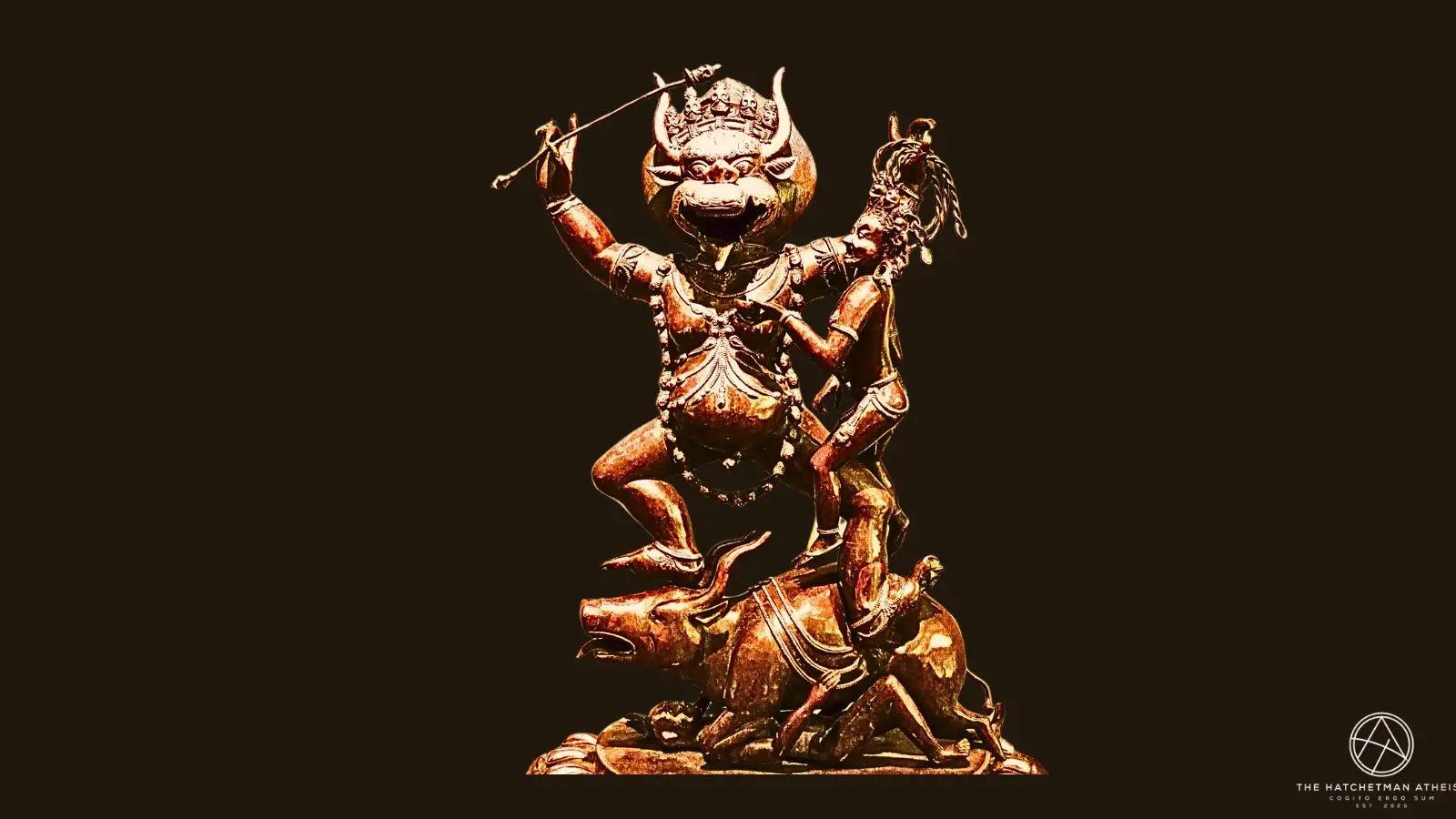
Rather than tunnels or radiant beings, Indian experiencers often describe being escorted by messengers to administrative settings where records are consulted. Judgment is procedural, not introspective. In multiple cases, the experiencer is informed that a mistake has been made: the wrong person was brought.
Crucially, several reports attribute this error to name confusion—sometimes involving another individual with the same name living in a nearby village. Once the mistake is identified, the experiencer is instructed to return to life.
Far Eastern Patterns (Where Data Exist)
Evidence from East Asian contexts is more limited and less standardized than Western or Indian datasets, but the available literature points in the same direction.
Comparative work notes that reported experiences in Japanese and other East Asian contexts more often emphasize ancestors rather than universal divine figures, show less focus on individualized moral judgment, and frame the self relationally—embedded in family, obligation, and continuity. Tunnel and light imagery appears less central or is absent altogether.
Importantly, these experiences are not always treated as a distinct category equivalent to the Western “near-death experience.” Instead, they blend into existing traditions of visions, spirit encounters, or altered states of consciousness. The scarcity of large-scale standardized studies here is itself informative, given how often NDEs are claimed to be universal.
Methodological Context
These cultural differences do not arise from casual storytelling or isolated reports. Western NDE research typically relies on retrospective interviews with cardiac arrest survivors or critically ill patients, often using standardized questionnaires such as the Greyson Scale. Indian studies, by contrast, were conducted through structured interviews with verification procedures designed to reduce post hoc embellishment.
Despite methodological differences, each cultural context produces internally consistent patterns. What differs is not the reliability of reporting, but the narrative content itself.
Seeing People Who Are Not Dead Yet
One of the most revealing details in the near-death literature is also one of the least discussed: experiencers sometimes report encountering individuals they believe to be dead, only to later discover that those individuals were alive and well.
A representative example appears in the Indian case literature documented by Pasricha and Stevenson, in which an experiencer encountered a familiar individual during a judgment scene and only later learned that the person was still alive. The assumption of death went unchallenged during the experience itself; the narrative focus remained on the judgment process rather than identity verification.³
From a literal afterlife perspective, this is fatal. From a cognitive perspective, it is expected.
Guides, Authority Figures, and Narrative Roles
Researchers have long noted that while the role of a guide or escort is common in near-death experiences, the identity of that guide varies widely. Angels, religious figures, deceased relatives, and culturally authoritative figures all appear in the literature. The function remains stable; the face changes.⁴
Sensational claims about pop-cultural figures occasionally circulate, but such cases do not appear in peer-reviewed datasets. Their absence is instructive.⁵
Pattern, Not Randomness
Near-death experiences are structured, coherent, and often profoundly impactful. But their structure points inward, not outward. Across cultures, we do not see convergence on a shared afterlife geography. We see convergence on a shared process.
What Cultural Variation Shows
Cultural variability does not undermine the sincerity of near-death experiences. It undermines a particular interpretation of them.
These experiences feel real because the brain produces a high-coherence internal model. They feel meaningful because the symbols employed are familiar. None of this requires access to another world.
For more from The Hatchetman Atheist:
If this work has been useful to you, feel free to buy me a coffee.
Footnotes
¹ Greyson’s scale was developed specifically to identify recurring components across Western NDE reports.
² Ring emphasized staged structure rather than idiosyncratic hallucination.
³ Pasricha and Stevenson, Indian case series with independent verification.
⁴ Kellehear on functional stability of guide roles.
⁵ No peer-reviewed documentation of named pop-culture guides exists.
Works Cited
Greyson, Bruce. “The Near-Death Experience Scale: Construction, Reliability, and Validity.” Journal of Nervous and Mental Disease, vol. 171, no. 6, 1983, pp. 369–375.
Kellehear, Allan. Experiences Near Death: Beyond Medicine and Religion. Oxford University Press, 1996.
Pasricha, Satwant K., and Ian Stevenson. “Near-Death Experiences in India: A Preliminary Report.” Journal of Nervous and Mental Disease, vol. 174, no. 3, 1986, pp. 165–170.
Ring, Kenneth. Life at Death. Coward, McCann & Geoghegan, 1980.