Was Jesus Copied from Horus? The Claim Collapses Under the Primary Sources
The claim that Christianity copied Horus is historical fan fiction. No virgin birth, no crucifixion, no resurrection. Just a lot of wishful memes and zero ancient sources.
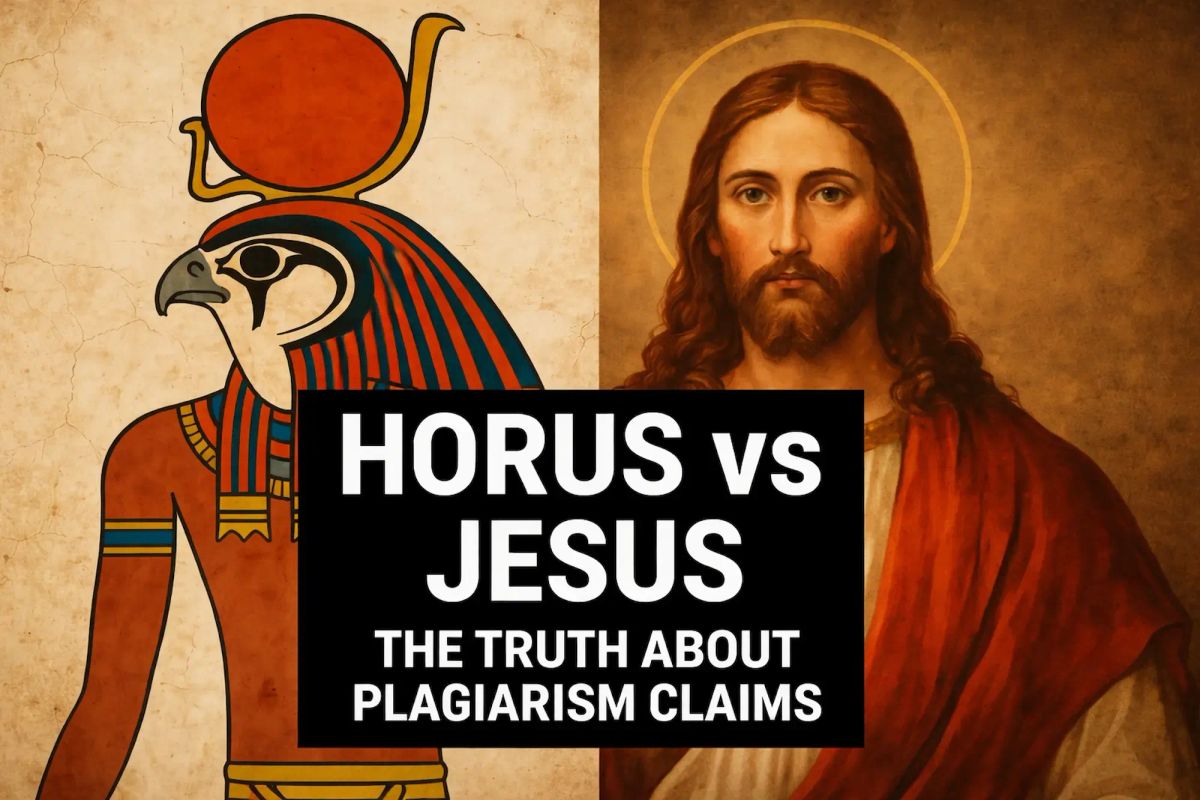
The claim that Christianity copied its central figure from the Egyptian god Horus circulates widely online. But when the actual Egyptian sources are examined—rather than modern summaries—the parallels disappear.
If you have spent any time in the skeptical corners of the internet, you have seen the list. Critics claim Horus was a carbon copy of Jesus: born of a virgin in a cave on December 25th, performed miracles like turning water into wine, had twelve disciples, and was crucified. While it sounds like a slam dunk for the copycat theory, the primary Egyptian sources—the Pyramid Texts, the Coffin Texts, and the Metternich Stela—reveal a story that is far more visceral and entirely distinct.
The $1000 Primary Source Challenge (USD)
I offer a standing challenge to anyone claiming Horus had twelve disciples or was crucified: find a single primary Egyptian text from the pharaonic era that explicitly confirms these claims.
To succeed, the evidence must be textual, not just a visual ambiguity. A bas-relief showing Horus next to twelve figures does not qualify, as artistic representations are not scripture. You must produce a verbatim translation from a primary source that uses the specific Egyptian equivalent for "twelve disciples" or "crucified." As the scholar Bart Ehrman notes, many of the books that popularized these claims are a disorganized jumble of nonsense where the authors seem to have simply made up their information.
Myth #1: The December 25th Misunderstanding
The claim that Horus was born on December 25th, signaled by a star and three wise men, is a modern astronomical interpretation mapped onto the Bible, not Egyptian history. In reality, the birth of Horus was celebrated during the month of Khoiak or during the epagomenal days in late August. There is no Egyptian text linking a Star in the East to the birth of Horus.
Myth #2: The Sexual Conception of a God
The idea that the New Testament writers copied the virgin birth from Horus is a modern fiction that collapses the second you read an actual Egyptian scroll. In the primary records—the Pyramid Texts and the Great Hymn to Osiris—there is no holy spirit and no immaculate anything. This is a story of blood, swamp mud, and magical necro-procreation.
According to the myth, the god Set hacked his brother Osiris into fourteen pieces and threw them into the Nile. When Isis went to retrieve her husband’s remains, she found almost everything except for his phallus, which had been eaten by an oxyrhynchus fish. To produce an heir, Isis had to fashion a prosthetic phallus out of gold to make the corpse whole. She did not bring Osiris back to life to walk the earth; she used her wings to fan breath into his mummified lungs just long enough for a single, desperate sexual union. Transforming into a bird—a kite—she hovered over her husband's reanimated body to receive his seed.
To claim the New Testament authors copied this is a massive reach. The New Testament describes a mortal woman and a divine miracle; the Egyptian texts describe a goddess using a golden prosthetic and swamp magic to salvage a bloodline from a corpse. Even the birthplace is a mismatch. Horus was not born in a stable or a cave. The Metternich Stela is explicit: Isis fled into the Nile Delta to hide from her brother-in-law and gave birth to Horus in the Marshes of Chemmis, huddling among papyrus plants and mud to avoid being found.
Myth #3: Twelve Disciples and Water into Wine
The claim that Horus had twelve disciples and turned water into wine is equally baseless. Horus was accompanied by the Shemsu Heru, or Followers of Horus, but their number is never fixed at twelve in any primary text. In various dynasties, the number of his retinue changes based on the ritual context, but it never mirrors the specific apostolic "Twelve" found in the Gospels.
Furthermore, there is no scriptural record of Horus turning water into wine. While wine was associated with Osiris as a god of vegetation and the afterlife, Horus was a sky deity. The miracle at Cana has no precursor in the Egyptian myths of the hawk-headed god.
More from the "Everything is a Copy" series:
- 👉 Parallelism: Why everything isn't a copy
- 👉 The Attis Resurrection Myth Debunked
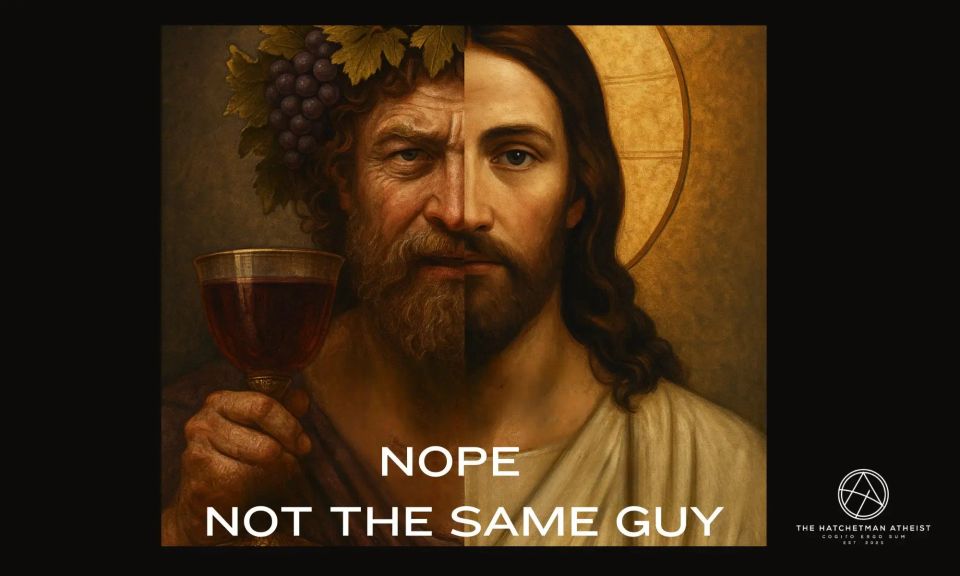
- 👉 Dionysus vs jesus: Fact checking the vine
- 👉 The Easter Bunny: Not as pagan as you think
Myth #4: The Miracle Worker Claims
Internet memes often claim Horus healed the sick and walked on water. While Horus was indeed a "healer" in the Egyptian sense, his miracles were specifically magical protections against venomous creatures, not the messianic healings of the blind or lame found in the Judeo-Christian tradition. The Metternich Stela explicitly lists his power as the ability to close the mouths of biting snakes and falling crocodiles. These were talismans for the living to use against the dangers of the Nile, not a ministry of spiritual salvation.
Myth #5: Death and Resurrection
Even the death of Horus is a misinterpretation. The concept of crucifixion did not exist in ancient Egypt, and as an immortal god, Horus never died. The Metternich Stela records that the infant Horus was bitten by a poisonous scorpion. He was healed and revived by the magic of Thoth so that he could fulfill his destiny as king. Because he never died, there was no resurrection. He simply recovered from a wound. Jesus’s narrative is defined by a mortal death, while Horus’s narrative is defined by his inherent immortality.
Why the Myth Persists
This myth survives because it is easier to share a meme than to read the Book of the Dead. Most of the copycat claims originated with 19th-century authors like Kersey Graves, who misinterpreted Egyptian artistic poses as crosses and forced pagan myths into Christian boxes to serve a specific agenda. As Bart Ehrman points out, mythicists who rely on these fabrications should not be surprised that their views are not taken seriously by real scholars.
Works Cited
- Allen, James P. The Ancient Egyptian Pyramid Texts. Society of Biblical Literature, 2005.
- Ehrman, Bart D. Did Jesus Exist? The Historical Argument for Jesus of Nazareth. HarperOne, 2012.
- Faulkner, Raymond O. The Ancient Egyptian Book of the Dead. British Museum Publications, 1985.
- The Metternich Stela. Egyptian Museum, Cairo. (4th Century BCE).