
Ancient Flood Myths and the Long Road to Noah's Ark: Plagiarism in Genesis
The Noah story wasn’t the first flood narrative—it was the last in a long Mesopotamian tradition. This post traces how the flood myth began in Sumer, evolved through Babylon and Assyria, and finally entered the Hebrew Bible centuries later.
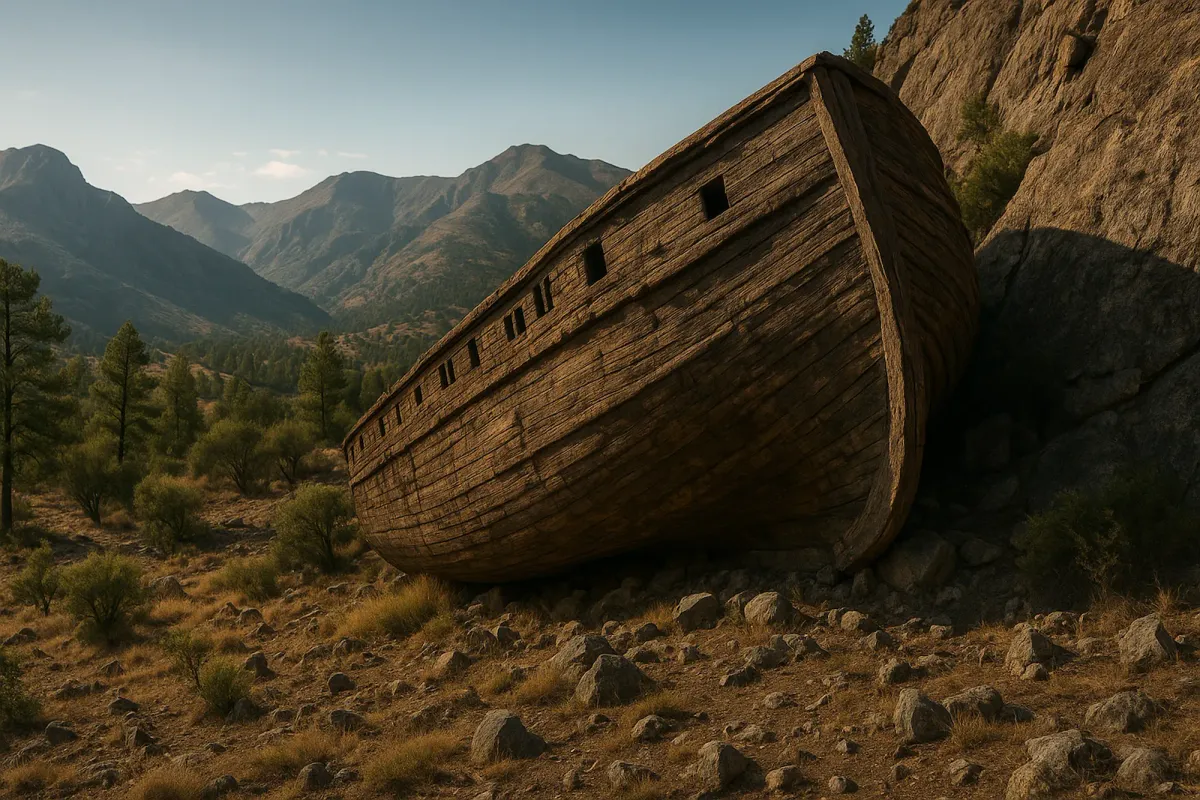
Flood myths are some of the oldest stories humanity ever told, and the version in Genesis is one of the youngest. Long before Noah ever floated onto the page, Sumerian and Babylonian scribes were already writing flood tales that look uncannily familiar: a divine warning, a chosen survivor, a giant boat, animals in tow, and the uneasy aftermath of global destruction.
The biblical story isn’t a unique divine message—it’s the final link in a chain of Mesopotamian narratives passed from empire to empire, preserved by scribes, shaped by exile, and eventually rewritten in Hebrew centuries after the original versions were carved into clay.
To understand Noah, you have to start not in ancient Israel, but in Sumer—where the flood myth was born, refined, recycled, and ultimately adopted into the tradition that became the Hebrew Bible.
How We Know These Flood Stories Are Related
The flood narratives of the ancient Near East share a set of distinctive features that appear together far too neatly to be independent inventions. These aren’t generic motifs like “a lot of rain.” They are narrative fingerprints:
- A divine plan to wipe out humanity.
- A single virtuous man chosen to survive.
- A warning to build an enormous boat.
- Animals and family members taken aboard.
- A catastrophic flood destroying nearly everyone else.
- Birds released to test if dry land has returned.
- A sacrifice offered after the waters recede.
- Divine regret or a promise not to repeat the destruction.
The Eridu Genesis (Sumerian), Atrahasis Epic (Old Babylonian), the flood episode in Gilgamesh (Akkadian), and the Genesis version in Hebrew all follow this pattern closely. The flood hero changes names—Ziusudra, Atrahasis, Utnapishtim, Noah—but his story remains recognizable.
Such consistency points strongly to a line of transmission. Stories adapt, languages mutate, kingdoms fall, but core structures persist. These flood stories behave like related species sharing a common ancestor.
How the Story Spread Across Empires
Myths travel the same roads as armies, merchants, and scribes. The flood story’s journey mirrors the flow of political power through Mesopotamia.
Sumer: Where the Flood Story Begins (c. 3000–2000 BCE)
The earliest written flood narrative appears in the Eridu Genesis (around 2150 BCE). Sumerian scribes describe Ziusudra, a pious king warned by the god Enki to build a massive vessel. Nearly everything that makes later flood stories distinctive is already present.
When Sumer collapsed, its literature did not. Akkadian-speaking rulers preserved these stories and carried them into the next political age.
Akkad and Old Babylon: Translation and Reinvention (c. 2300–1600 BCE)
As Akkad rose to power, its scribes translated Sumerian literature into their own Semitic language. The flood narrative flourished in this multilingual world. Around 1700 BCE, the Atrahasis Epic appears, adding new elements: human overpopulation, divine irritation, and attempts to control fertility.
By this time, the flood story had become a standard educational text. Any educated person in the region would have known it.
Assyria and Neo-Babylonia: Canonizing the Tradition (c. 900–539 BCE)
The Assyrians institutionalized literature by creating vast royal libraries. The Epic of Gilgamesh, including Utnapishtim’s flood account, enters its most complete form around 1100 BCE and becomes part of the canonical curriculum. Copies of these texts were placed in temples, palaces, and archives for centuries.
When the Neo-Babylonian Empire conquered Judah, these stories were already well established as Mesopotamian cultural heritage.
Judah in Exile: Where the Stories Meet (597–538 BCE)
The Babylonian Exile is the turning point. Judean scribes, uprooted from their homeland, found themselves living in a society with a two-thousand-year-old literary archive. In libraries like those at Babylon and Borsippa, they encountered Atrahasis, Gilgamesh, and many other texts woven deeply into the intellectual life of Mesopotamia.
It is during or shortly after this period that the flood narrative in Genesis takes its final shape. The story is reframed within a monotheistic worldview, but its structure—down to specific plot beats—reflects the older tradition.
The Role of Language in Dating the Hebrew Flood Story
To place the Genesis flood story properly in history, we must understand when Hebrew became a written language.
Around 1200 BCE, the broader Canaanite dialect family began to splinter, creating regional linguistic currents that would eventually produce Hebrew. But written Hebrew as we can clearly identify it does not appear until the 10th century BCE, in short inscriptions carved into pottery or stones. Complex literary composition in Hebrew comes even later.
This matters because it underscores that the biblical flood story could not have been written during the Bronze Age. By the time Israelites were creating written literature, the Sumerian flood story was more than a millennium old, the Atrahasis Epic centuries old, and Gilgamesh already a classic.
The Hebrew version is a late entrant into an already ancient conversation.
Timeline of Flood Stories, Empires, and Cultural Exchange
Below is a consolidated timeline showing when these civilizations flourished, when the flood narratives appear, and when they could have interacted with early Israelite culture.
c. 3000–2000 BCE – Rise of Sumerian Cities
- First scribal schools develop.
- Oral ancestors of the flood myth circulate.
- Early urban states dominate southern Mesopotamia.
c. 2150 BCE – Sumerian Flood Story (Eridu Genesis)
- Ziusudra warned by the gods.
- First written flood narrative.
- Story begins its long literary life.
c. 2300–2000 BCE – Akkadian Empire and Successor States
- Akkadian replaces Sumerian as administrative language.
- Flood stories translated and adapted.
- Myth becomes part of multilingual scribal culture.
c. 1900–1600 BCE – Old Babylonian Period
- Atrahasis Epic composed (~1700 BCE).
- Adds theological and sociopolitical layers.
- Flood myth solidified as a Mesopotamian staple.
c. 1600–1200 BCE – Kassite and Middle Babylonian Period
- Continuous copying of flood literature.
- Canaanite dialects in Levant evolve; ancestral Hebrew spoken.
- No significant contact yet with Israelite groups.
c. 1200–1000 BCE – Early Iron Age Israel and Judah
- Hill-country villages appear; early Israelites form.
- No evidence for a centralized monarchy.
- Earliest Hebrew dialects spoken.
- Written Hebrew minimal or absent.
c. 1100 BCE – Gilgamesh Flood Narrative (Most Complete Version)
- Utnapishtim’s story canonized.
- Standard version used in scribal education.
c. 1000–900 BCE – First Hebrew Inscriptions
- Short texts appear in archaeological record.
- Beginning of Hebrew literary activity.
- Proto-Noah flood traditions possibly circulating orally.
c. 900–600 BCE – Assyrian Empire Dominance
- Israel and Judah become vassals; northern kingdom falls (722 BCE).
- Increased cultural contact with Mesopotamian literature.
- Flood stories preserved in Assyrian libraries.
c. 600–539 BCE – Neo-Babylonian Empire
- Judah conquered; elites exiled to Babylon.
- Judean scribes encounter the Mesopotamian literary canon.
- Intense cultural exchange during exile.
c. 6th–5th Century BCE – Final Composition of the Noah Story
- Priestly and non-Priestly strands blended.
- Flood narrative enters Genesis in its final form.
- The story fully inherits Mesopotamian structure but with distinct theology.
Closing Thoughts
The Noah story is not the starting point of an ancient tradition but rather its late inheritor. Sumerian priests, Babylonian scholars, and Assyrian librarians kept the flood narrative alive for centuries before Israel’s scribes shaped their version. Myths drift the way rivers do—shifting course, picking up debris, carving new channels. The flood story endured not because it was told once, but because each generation found something worth preserving inside its waters.
Works Cited
Adamthwaite, Murray. Gilgamesh and the Biblical Flood—Part 2. Journal of Creation, 2014.
Frymer-Kensky, Tikva. “The Atrahasis Epic and Its Significance for Our Understanding of Genesis 1–9.” The Biblical Archaeologist, vol. 40, no. 4, 1977, pp. 221–223.
Hämmerly-Dupuy, Daniel. Some Observations on the Assyro-Babylonian and Sumerian Flood Stories. Andrews University Press, 1968.
Inman, Jonathan. An Analysis of Ancient Near Eastern Flood Texts. Southern Adventist University, 2000.
Pfost, James. A Literary Analysis of the Flood Story as a Semitic Type-Scene. Studia Antiqua, 2014.